 Save
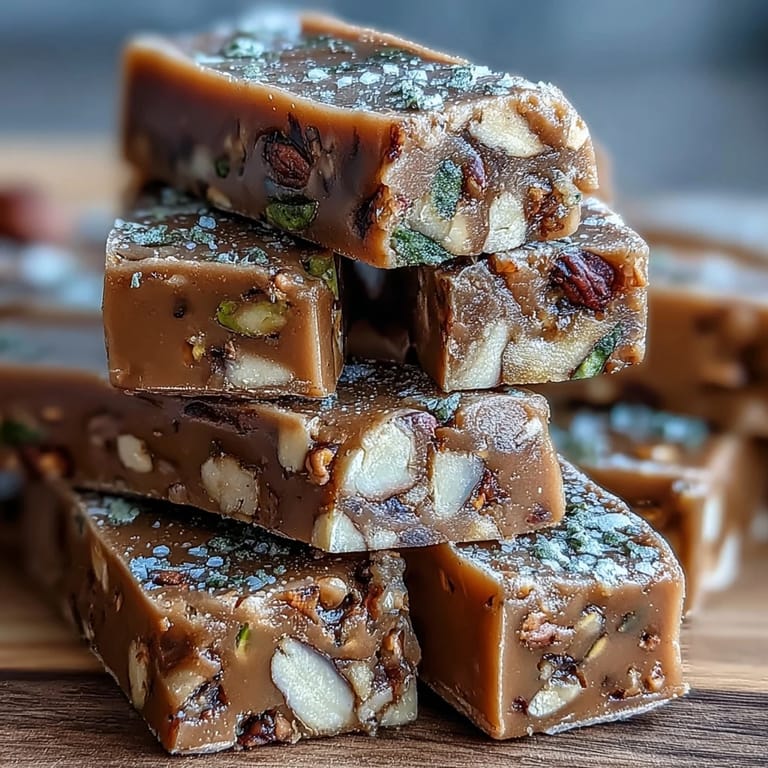
Save The first time I encountered hojicha nougat was in a tiny sweet shop in Kyoto, where the shopkeeper wrapped each piece in handmade washi paper. That roasted, earthy green tea flavor against the chewy sweetness felt like discovering something ancient yet entirely new. I spent the next three years trying to recreate that experience in my own kitchen, learning that candy-making is equal parts science and patience.
Last winter, I made a batch for my sister who claims to dislike green tea anything. She took one skeptical bite, then proceeded to eat three pieces while standing at the kitchen counter, finally admitting that maybe roasted green tea and butter were meant to be together after all.
Ingredients
- 100 g roasted almonds and 50 g roasted pistachios: The combination brings both sweetness and a slight savory edge that plays beautifully against hojichas earthiness. Toast them lightly yourself if you can—the difference in aroma is worth the extra five minutes.
- 120 g honey: Honey contributes floral notes that complement the roasted tea, plus it helps create that signature chewy texture you want in nougat.
- 200 g granulated sugar: Provides structure and the necessary crunch for the sugar stage. Do not reduce this or your nougat will never set properly.
- 80 ml water: Just enough to dissolve your sugar and honey for even cooking.
- 1/2 tsp fine sea salt: Crucial for balancing sweetness and making all the flavors pop.
- 2 large egg whites: Must be room temperature for proper volume. Cold egg whites will not whip correctly when you add the hot syrup.
- 1/4 tsp cream of tartar: Stabilizes your egg whites so they hold up when you pour in that boiling sugar syrup.
- 2 tbsp hojicha powder: The star of the show. Look for deep amber colored powder, which indicates proper roasting. Matcha will not give you the same flavor profile.
- 1 tsp vanilla extract: Rounds out the roasted notes with warmth.
- 30 g unsalted butter: Adds richness and helps create that smooth, luxurious mouthfeel.
Tired of Takeout? 🥡
Get 10 meals you can make faster than delivery arrives. Seriously.
One email. No spam. Unsubscribe anytime.
Instructions
- Prepare your workspace:
- Line a 20x20 cm baking pan with parchment paper or edible wafer paper, letting the paper hang over the sides for easy removal later. Have your toasted nuts ready and all ingredients measured before you start cooking the sugar.
- Toast your nuts:
- In a dry skillet over medium heat, warm almonds and pistachios for 2 to 3 minutes until fragrant, stirring frequently. Watch closely as nuts can burn quickly. Set aside to cool while you prepare the base.
- Make the sugar syrup:
- Combine honey, sugar, water, and salt in a saucepan. Cook over medium heat, stirring only until sugar dissolves completely. Stop stirring, increase heat to medium high, and boil until the syrup reaches exactly 140 degrees Celsius on your candy thermometer.
- Whip the egg whites:
- While syrup cooks, beat egg whites with cream of tartar in a stand mixer until soft peaks form. Timing matters here—you want the whites ready just as your syrup hits temperature.
- Combine syrup and whites:
- With mixer on low speed, carefully pour the hot syrup in a thin, steady stream down the side of the bowl into the egg whites. Increase speed to high and beat for 5 minutes until the mixture is glossy, thick, and holds its shape.
- Add the flavor:
- Add hojicha powder and vanilla extract, beating just until combined and the mixture is uniformly colored with those beautiful amber flecks.
- Finish the batter:
- Fold in softened butter until fully incorporated, then gently mix in your toasted nuts. Work quickly as nougat starts setting fast.
- Shape and set:
- Immediately spread the nougat evenly into your prepared pan, pressing firmly to eliminate air pockets. Top with another sheet of wafer paper if using. Let set at room temperature for at least 30 minutes until firm.
- Cut and wrap:
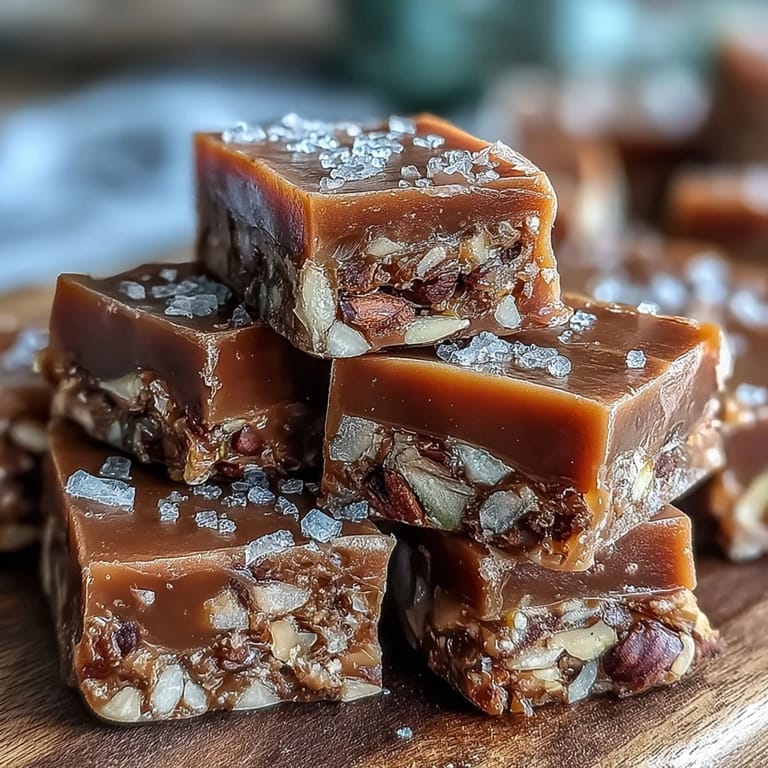
- Remove from pan using the paper overhang. Cut into bite sized pieces with a sharp knife lightly oiled with vegetable oil. Wrap individually in parchment or cellophane to prevent pieces from sticking together.
 Save
Save I once forgot to line my pan properly and spent twenty minutes wrestling with nougat that had bonded to the metal. The pieces came out jagged and uneven, though my friends still ate them all without complaint, calling them rustic artisan candy.
Getting The Texture Right
The difference between good nougat and great nougat comes down to beating time after adding the syrup. Too little and your candy will be sticky and soft. Too much and it becomes rock hard. Five minutes on high speed gives you that perfect chewy yet tender texture that yields just enough when you bite in.
Serving Suggestions
This nougat shines when served alongside a cup of hojicha tea, allowing the roasted notes to echo and intensify. I have also discovered it pairs surprisingly well with aged sake or light Japanese whisky, which cuts through the sweetness and highlights the earthy tea flavors.
Storage And Gifting
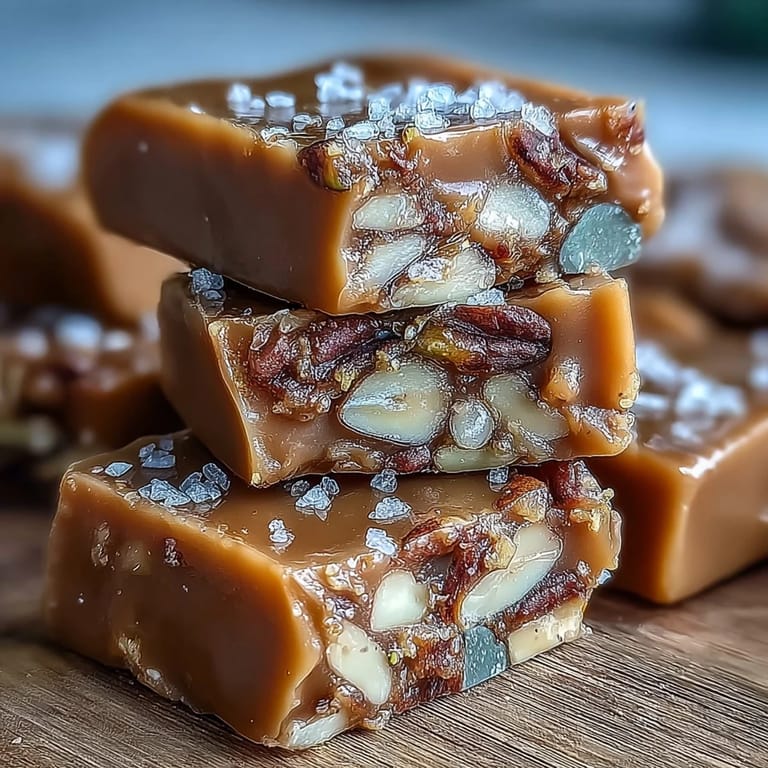
Properly wrapped nougat keeps beautifully at room temperature for up to one week, though it rarely lasts that long in my house. The texture actually improves after a day or two as flavors meld and the chew settles into its final state.
- Wrap each piece individually in parchment paper tied with kitchen twine for an elegant gift
- Layer pieces between wax paper in an airtight container if storing for later
- Avoid refrigeration as it makes the nougat hard and loses that signature chew
 Save
Save There is something deeply satisfying about making your own candy, about transforming simple ingredients into something that feels like a small luxury. Every batch teaches me something new about patience and precision.
Questions & Answers
- → What makes hojicha nougat different from traditional nougat?
Hojicha nougat incorporates roasted Japanese green tea powder, adding earthy, toasty notes that complement the honey sweetness. This creates a uniquely Japanese-inspired variation on classic French nougat.
- → How do I know when the syrup reaches the correct temperature?
Use a candy thermometer to monitor the syrup. It must reach exactly 140°C (285°F), known as the soft-crack stage. This temperature ensures proper texture and prevents the nougat from being too sticky or hard.
- → Can I substitute the nuts in this nougat?
Absolutely. While almonds and pistachios work beautifully with hojicha's earthy flavor, you can use cashews, hazelnuts, or walnuts. Toast them lightly beforehand to enhance their natural flavor.
- → Why is my nougat too sticky or hard?
Sticky nougat usually means the syrup didn't reach 140°C. Hard nougat indicates it was overheated. Precise temperature control is essential. Also ensure your egg whites are at room temperature for proper volume.
- → How should I store hojicha nougat?
Wrap individual pieces in parchment or cellophane and store in an airtight container at room temperature. The nougat keeps well for up to one week. Avoid refrigeration as it can make the texture too hard.
- → What's the best way to cut nougat cleanly?
Use a sharp knife lightly coated with vegetable oil. Make long, decisive cuts rather than sawing motions. If the nougat is too firm, let it warm slightly at room temperature before cutting.