 Save
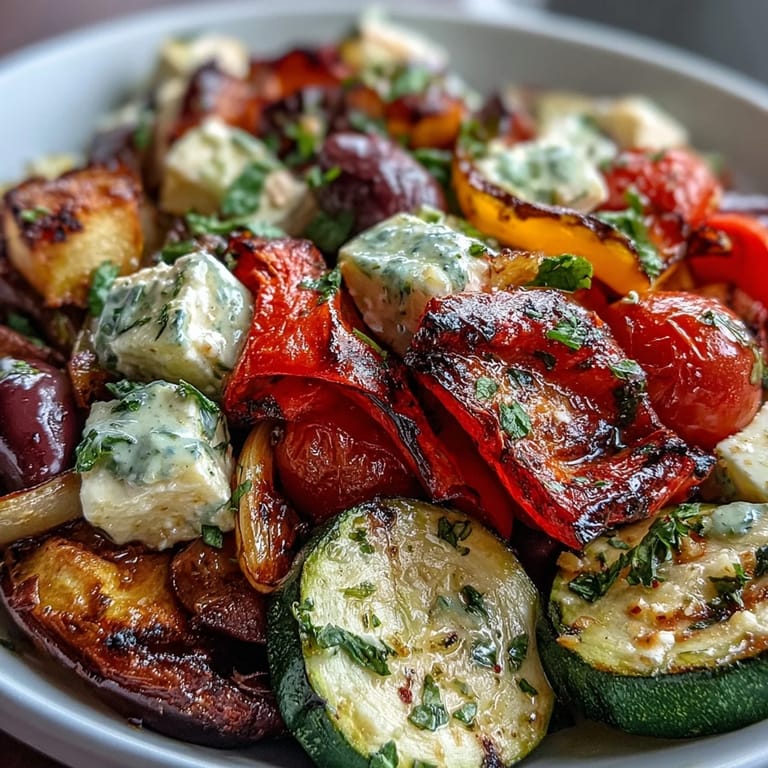
Save There's something magical about the moment vegetables hit a hot oven—the kitchen fills with this deep, caramelized fragrance that makes you forget you're eating salad. I discovered roasted Greek salad by accident one autumn evening when I had too many vegetables and not enough patience for the raw approach. The warm, blistered peppers and soft eggplant completely transformed what I expected to be a simple side dish into something unexpectedly comforting and craveable.
I made this for a dinner party last spring when a friend announced she'd turned vegetarian, and I wanted to prove that meatless didn't mean boring. Watching everyone go back for seconds while the roasted tomatoes released their concentrated sweetness onto the creamy feta—that's when I knew this recipe was a keeper. It became the dish I make whenever I want to feel like I'm cooking something Mediterranean without leaving my kitchen.
Ingredients
- Red and yellow bell peppers: Cut into chunky 1-inch pieces so they caramelize on the edges while staying tender inside—don't slice them thin or they'll shrivel.
- Red onion: Wedges work better than diced pieces here because they hold their shape and develop a sweet, jammy quality when roasted.
- Zucchini: Half-inch rounds prevent them from turning mushy, and they pick up those gorgeous charred spots that taste nutty and deep.
- Eggplant: The secret weapon that nobody expects in a Greek salad—cube it and it becomes creamy and rich after roasting, almost meaty in texture.
- Cherry tomatoes: Halve them so they burst slightly and concentrate their flavor, creating little pockets of intense tomato essence.
- Extra-virgin olive oil: Use the good stuff you actually like tasting, both for roasting and in the dressing—it makes a real difference.
- Cucumber: Keeps its cool crispness as the salad base, providing textural contrast against the warm roasted vegetables.
- Kalamata olives: These briny, slightly bitter olives are non-negotiable in a Greek salad and balance all the caramelized sweetness beautifully.
- Feta cheese: Crumble it generously—it's meant to be scattered throughout, not hidden, so it melts slightly into the warm vegetables.
- Fresh flat-leaf parsley: Chop it just before serving so it stays bright and herbaceous rather than bruised and dark.
- Red wine vinegar and lemon juice: Together they create a dressing that's sharp enough to cut through the richness of roasted vegetables and feta.
- Dried oregano: The backbone of the dressing—it smells and tastes like Greece in a single pinch.
- Dijon mustard: Acts as an emulsifier so the dressing doesn't separate and coats the vegetables in a silky way.
- Garlic: Grated rather than minced so it distributes evenly and doesn't create harsh bites.
Tired of Takeout? 🥡
Get 10 meals you can make faster than delivery arrives. Seriously.
One email. No spam. Unsubscribe anytime.
Instructions
- Heat your oven and prep the pan:
- Get that oven to 220°C (425°F) and line a baking sheet with parchment paper—this prevents sticking and makes cleanup almost joyful. The high heat is what creates that caramelization magic, so don't be tempted to lower the temperature.
- Prepare and season the vegetables:
- Toss all your cut vegetables together with the 2 tablespoons of olive oil, sea salt, and black pepper, making sure every piece gets coated. Spread them out in a single layer on the baking sheet so they actually roast instead of steaming in their own moisture.
- Roast until golden:
- Slide them into the oven and set a timer for 15 minutes, then give everything a gentle stir so the vegetables roast evenly on all sides. They're done when the edges are caramelized and slightly blackened, the peppers are tender, and the kitchen smells absolutely incredible—usually around 25 to 30 minutes total.
- Make the dressing while vegetables roast:
- Whisk together the olive oil, red wine vinegar, lemon juice, oregano, Dijon mustard, and grated garlic in a small bowl until the mixture is thick and emulsified. Taste it and adjust the salt and pepper—the dressing should be bright enough that it makes you pucker slightly.
- Build the salad:
- Arrange those cool cucumber slices on a big platter or salad bowl as your foundation, which will stay crisp while the warm vegetables sit on top. Scatter the roasted vegetables over the cucumbers, then scatter the olives and feta across everything.
- Finish and serve:
- Drizzle the dressing over the salad and tear or scatter the fresh parsley on top, then give everything a gentle toss so the dressing gets everywhere. Serve it while the vegetables are still warm so the feta softens slightly, though it's equally delicious at room temperature if you're making it ahead.
 Save
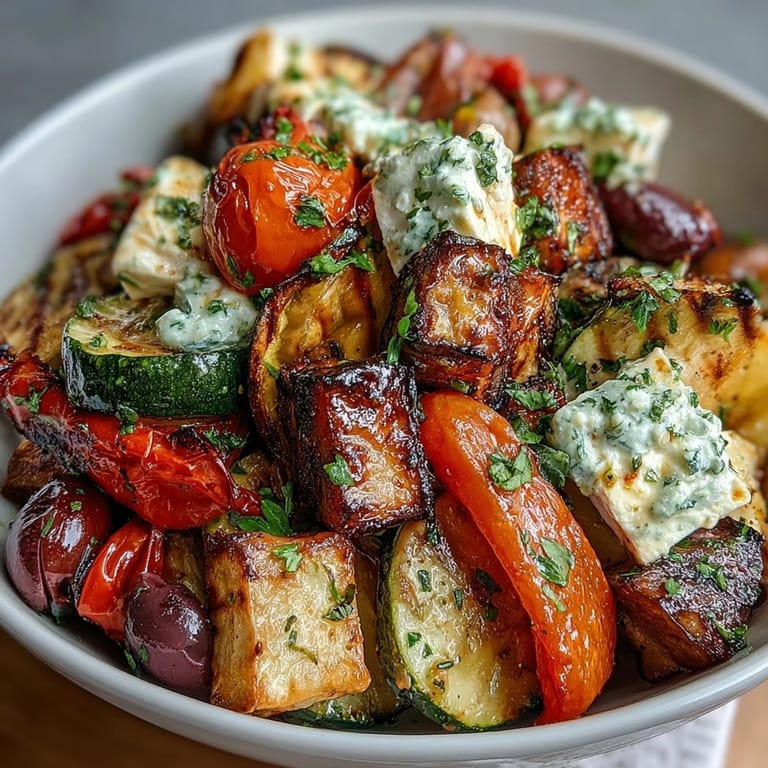
Save One Sunday afternoon, my grandmother tasted this salad warm straight from the oven and said something I'll never forget: that it finally made sense why people got emotional about food. The combination of temperatures, textures, and flavors somehow created something bigger than its individual parts—less like eating your vegetables and more like sitting at a table somewhere overlooking the Mediterranean.
The Secret to Perfectly Roasted Vegetables
The key is understanding that roasting vegetables isn't just about cooking them—it's about concentrating their natural sugars and creating new flavors that don't exist in the raw version. When you expose them to that high dry heat, the water content evaporates and the natural sugars caramelize, creating depth and complexity. This is why this salad tastes nothing like a traditional cold Greek salad, and honestly, once you go warm you'll find yourself making it again and again.
How to Build This Salad for Different Occasions
I've served this at casual weeknight dinners, potlucks, and even a fancy dinner party where I plated it individually and it still felt effortless. The beauty is that you can make it exactly as written for a standard family meal, or you can get fancy by plating it on individual plates and drizzling the dressing artfully around the vegetables. It works equally well as a light summer dinner paired with grilled pita, or as a substantial side dish next to fish or chicken if you want to make it less of the main event.
Storage and Variations That Actually Work
Store the roasted vegetables and dressing separately in the refrigerator, and assemble the salad when you're ready to serve it so the cucumber stays crisp and the whole thing doesn't get soggy. If you're cooking for someone with different tastes or dietary needs, this recipe is incredibly flexible—swap the eggplant for mushrooms if that's more their style, add roasted potatoes to make it heartier, or throw in capers and sun-dried tomatoes for extra brightness.
- The roasted vegetables actually taste better the next day after the flavors have had time to meld together, so make them ahead if you're meal prepping.
- Fresh herbs like mint or dill can replace the parsley if you want to shift the flavor profile slightly without losing the Mediterranean spirit.
- A crumble of halloumi cheese works wonderfully instead of feta if you want something that holds its shape a bit better or adds a slightly salty, squeaky texture.
 Save
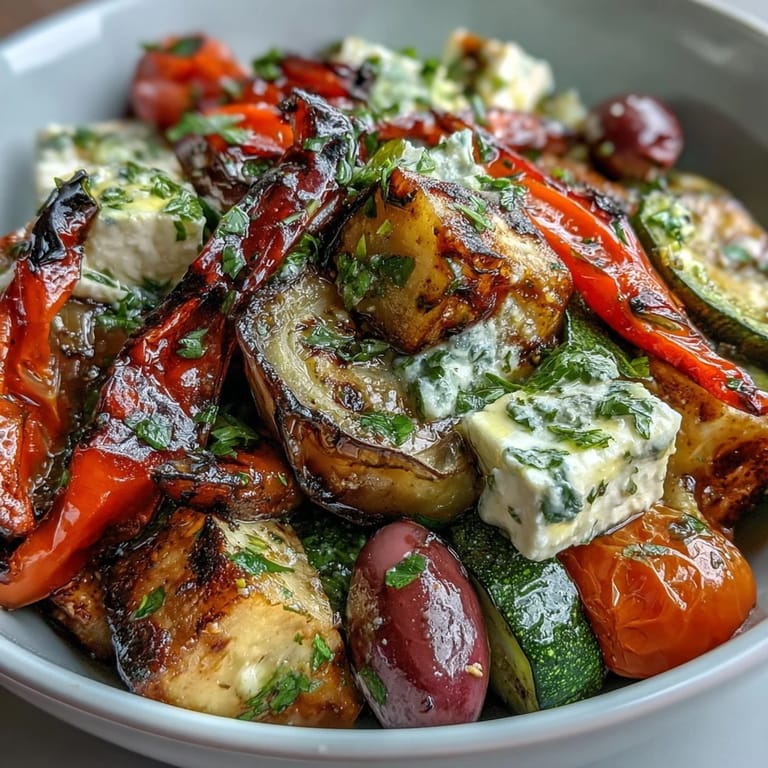
Save This salad taught me that sometimes the simplest tweaks to familiar recipes create something that feels entirely new and exciting. Make it tonight, taste it warm, and understand why it's become the dish I reach for whenever I want to feel like I'm cooking something special without actually trying that hard.
Questions & Answers
- → Can I make this salad ahead of time?
Yes, you can roast the vegetables up to a day in advance and store them in the refrigerator. Bring to room temperature before tossing with fresh ingredients and dressing.
- → What vegetables work best for roasting?
Bell peppers, eggplant, zucchini, red onions, and cherry tomatoes are ideal because they hold their shape well and develop sweet, caramelized flavors when roasted at high heat.
- → Is there a substitute for feta cheese?
You can use halloumi for a salty, squeaky texture, or a vegan feta alternative. Goat cheese crumbles or cotija also work well as salty, crumbly toppings.
- → Can I grill the vegetables instead of roasting?
Absolutely! Grilling adds a lovely smoky char. Cut vegetables into larger slices to prevent falling through grates, and cook until tender with grill marks.
- → How long does the dressing stay fresh?
The lemon-oregano dressing keeps in an airtight container in the refrigerator for up to a week. Shake or whisk well before using as the oil may separate.
- → What should I serve with this salad?
Grilled pita bread, crusty bread, or roasted potatoes make excellent accompaniments. A dry white wine like Assyrtiko or Pinot Grigio pairs perfectly.