 Save
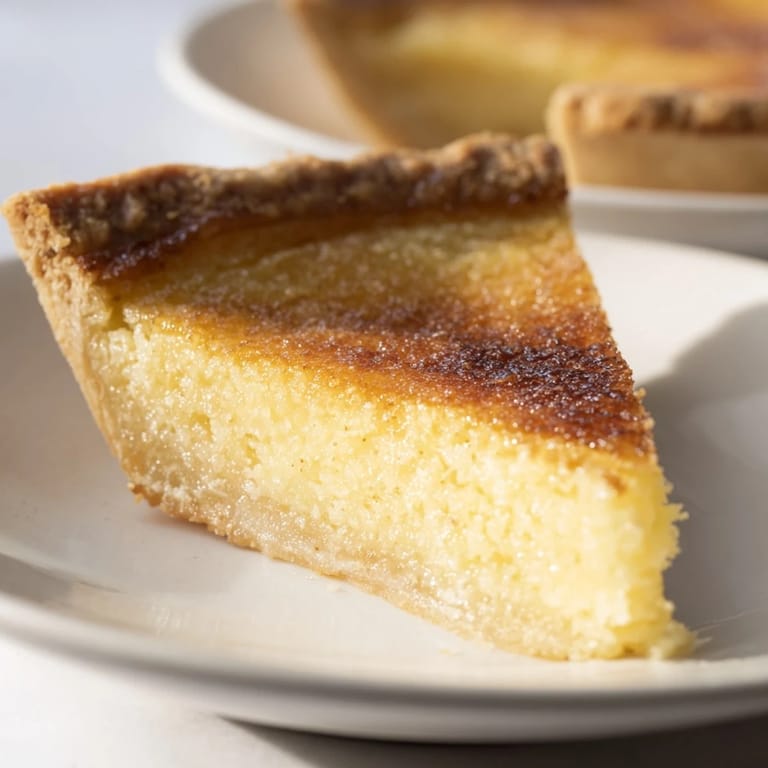
Save My grandmother kept a chess pie on her kitchen counter almost year-round, and I didn't understand why until I made one myself on a whim. The filling is deceptively simple—butter, eggs, sugar, a whisper of vanilla—but somehow it transforms into something custard-like and golden, with a crispy sugar crust on top that shatters when your fork touches it. I've made it dozens of times since, and it never fails to remind me why this humble Southern dessert has survived generations without needing any fancy tricks.
I brought one to a potluck once without realizing three other people were bringing desserts, and somehow mine disappeared first while the elaborate layer cakes sat untouched. That's when I understood—chess pie doesn't announce itself or need to be dressed up to impress. It just quietly becomes everyone's favorite because it actually tastes like butter and comfort.
Ingredients
- 1 unbaked 9-inch pie crust: You can absolutely use store-bought without shame; that's what most of my family does, and nobody notices the difference once that filling is baked into it.
- 1 1/2 cups granulated sugar: This isn't just sweetener—it's going to create that glossy, slightly caramelized top layer that makes the pie look far fancier than it actually is.
- 1/2 cup unsalted butter, melted and cooled: Melted butter mixes more evenly into the filling than cold butter ever could, and letting it cool slightly keeps the eggs from scrambling.
- 4 large eggs: These bind everything and create that custardy interior; room temperature eggs mix more smoothly, though honestly cold ones work too.
- 1 tablespoon cornmeal and 1 tablespoon all-purpose flour: These create a subtle thickening effect and give the filling a slight grain that feels more interesting than custard alone.
- 1/4 teaspoon salt: A small amount that you won't taste directly but that makes every other flavor sing louder.
- 1/4 cup whole milk: Whole milk keeps everything creamy; skimmed milk feels thin by comparison, though in a pinch it works.
- 1 teaspoon vanilla extract: Pure vanilla is worth using here because you can actually taste it, and it's the main flavor note that isn't sugar or butter.
- 1 tablespoon white vinegar (optional): This ingredient splits my family—some say it's essential for brightness, others have made perfect pies without it, so trust your instinct.
Tired of Takeout? 🥡
Get 10 meals you can make faster than delivery arrives. Seriously.
One email. No spam. Unsubscribe anytime.
Instructions
- Heat the oven and prepare your crust:
- Preheat to 350°F and place your crust in the pie dish, crimping the edges however they look good to you. If you've got a few minutes, pop it in the freezer while you work on the filling—this tiny step helps prevent a soggy bottom.
- Mix the dry foundation:
- Whisk together sugar, melted butter, eggs, cornmeal, flour, and salt until you have something smooth and homogeneous. You're looking for no visible flour streaks and a batter that looks almost like thin cake batter.
- Add the wet ingredients:
- Stir in milk, vanilla, and vinegar if you're using it, whisking until everything is silky and combined. This is when the filling starts to smell unmistakably like dessert—vanilla and butter filling the kitchen.
- Pour and bake:
- Carefully pour the filling into your crust and slide it into the oven for 45 to 50 minutes. You're watching for the edges to set while the very center still jiggles slightly when you gently shake the pan—that jiggle is what keeps it creamy instead of rubbery.
- Cool with patience:
- Let it cool completely on a rack before slicing, even though it smells incredible and you want to dig in immediately. The filling continues to firm up as it cools, and cutting it warm will give you messy slices instead of clean ones.
 Save
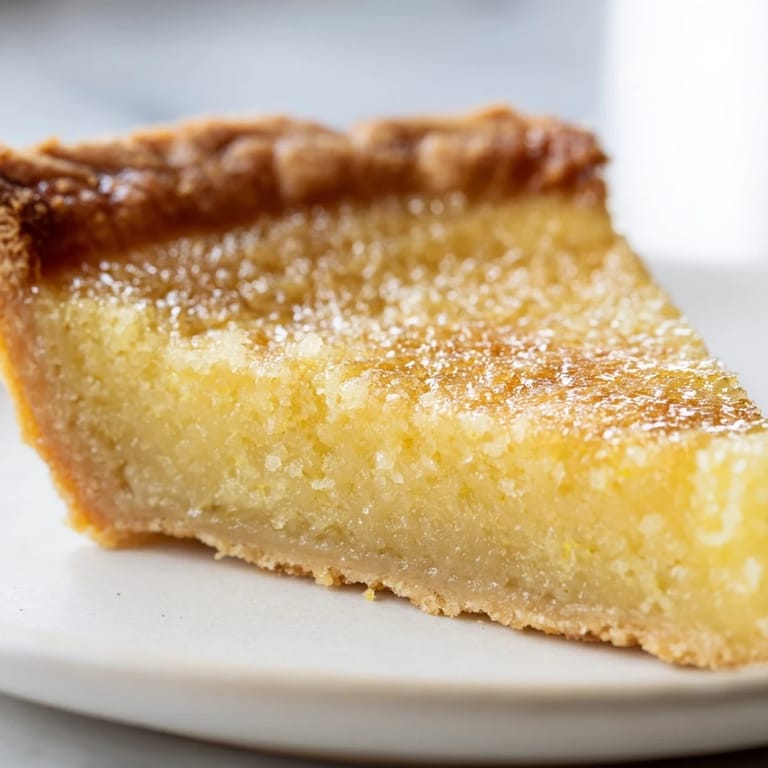
Save Years ago my mother called to say she'd burned a chess pie and thought it was ruined, but when I came over and tasted it, the darker caramelized top actually tasted better—deeper, almost toffee-like. We ate the whole thing without guilt, and I've never made one the same careful way since.
Why This Pie Endures
Chess pie belongs to a specific moment in American cooking when desserts were measured in simplicity rather than ingredients. It never asks you to fold egg whites or temper chocolate or wait overnight; it just needs a crust, a bowl, and an oven. There's something honest about that, something that makes it taste like home even if you've never had it before.
Variations That Work
I've added a pinch of nutmeg and watched it transform into something warm and spiced, almost like a pumpkin pie's quieter cousin. Lemon zest changes the entire character—suddenly it's bright and almost tangy, less sweet-forward. Some people swear by a splash of bourbon or brandy instead of vinegar, and honestly, any of these tweaks feel more like personal preference than improvement.
Serving and Storage
Serve it plain so you taste every layer, or pile it with fresh whipped cream and berries if you want to make it feel fancy. It keeps covered at room temperature for a couple of days, though I've never had one last that long because everyone keeps sneaking slices.
- A thin slice with strong coffee in the morning tastes completely different from an after-dinner slice with ice cream.
- If you're making this for someone, tell them it's homemade—the store-bought crust doesn't count as cheating, and they won't be able to tell anyway.
- This pie is small enough to share but rich enough that one slice genuinely satisfies, which is rare.
 Save
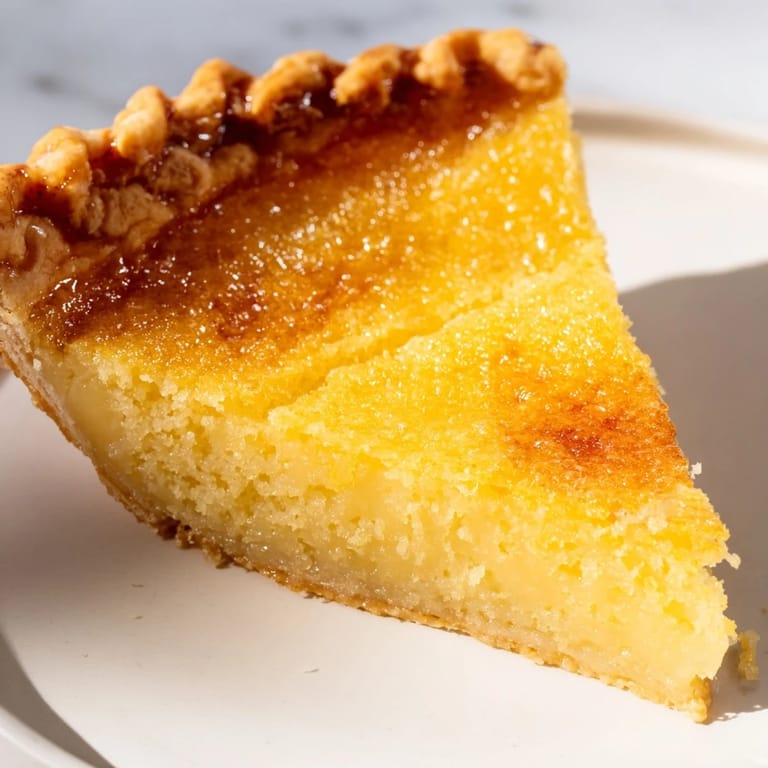
Save This is the kind of dessert that doesn't need to be defended or elevated—it exists perfectly as it is. Make it, share it, and watch it disappear.
Questions & Answers
- → What gives the custard its smooth texture?
The combination of eggs, melted butter, milk, cornmeal, and flour creates a silky and smooth filling that sets gently when baked.
- → Can I add extra flavors to this custard?
Yes, a pinch of nutmeg or lemon zest can be added to the filling for a subtle twist in flavor.
- → What is the purpose of the vinegar in the filling?
Vinegar adds a subtle brightness that balances the sweetness, but it is optional and can be omitted without affecting texture.
- → How do I know when the custard is done baking?
It’s ready when the center is just set, and the top turns a golden brown with a slight puff that settles as it cools.
- → What are good serving suggestions for this custard?
Serving with fresh berries or a dollop of whipped cream complements the buttery custard and adds freshness.