 Save
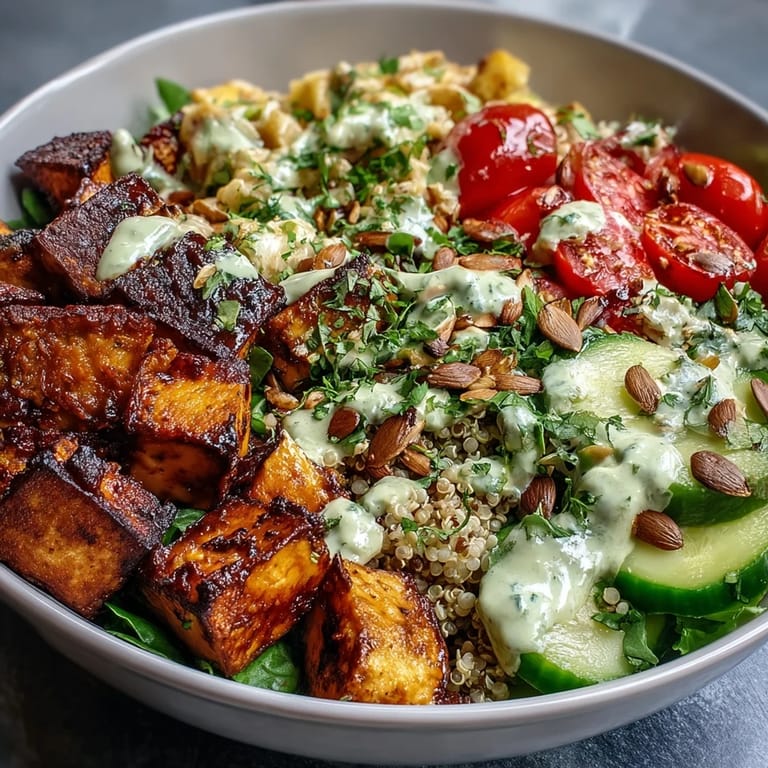
Save My kitchen became a canvas the afternoon a friend mentioned she was tired of eating the same lunch every day. I'd been experimenting with grain bowls quietly, stacking different combinations on the counter like edible art projects, and something clicked. The beauty of this bowl isn't in following rules—it's in the permission to build exactly what you're craving that moment, whether that's something warm and comforting or bright and assertive.
I made four of these one Sunday evening while my partner watched, half-skeptical about the amount of tiny bowls on the counter. By Tuesday, they were stealing bowls from the fridge and asking if I could make the dressing again. That's when I realized this wasn't just about eating well—it was about having something ready that felt intentional, not rushed.
Ingredients
- Grains (choose 1–2): Brown rice, quinoa, farro, or couscous form your foundation—pick what speaks to your mood or what you already have waiting in your pantry.
- Proteins (choose 1–2): Chicken, tofu, chickpeas, or shrimp give substance and staying power, and honestly, leftovers work beautifully here.
- Vegetables (choose 3–4, raw or roasted): Cherry tomatoes, cucumber, sweet potato, broccoli, carrots, and avocado bring color, texture, and nutrients—mix raw crunch with warm roasted pieces.
- Toppings & Extras: Feta cheese, toasted seeds or nuts, fresh herbs, and sesame seeds transform a bowl from plain to memorable with just a handful of additions.
- Dressings (choose 1): Lemon-tahini, balsamic vinaigrette, soy-ginger, or green goddess—the dressing is your flavor compass, so don't skip it.
Tired of Takeout? 🥡
Get 10 meals you can make faster than delivery arrives. Seriously.
One email. No spam. Unsubscribe anytime.
Instructions
- Cook Your Grains:
- Follow package directions and let them cool slightly after fluffing with a fork. I always make extra because these keep beautifully and give you a head start on the next bowl.
- Prepare Your Protein:
- Cook, bake, or pull from leftovers—this step is where meal prep saves you during the week. Cube or slice so it's ready to distribute evenly.
- Ready Your Vegetables:
- Wash, chop, and decide what gets roasted and what stays fresh. Roasting brings out sweetness in carrots and potatoes, while raw cucumber and tomatoes add brightness.
- Build Your Bowl:
- Start with grains as your base, layer protein and vegetables around, then scatter toppings like you're finishing a painting. Think about color balance and texture contrast as you go.
- Add Toppings & Dressing:
- Sprinkle seeds, nuts, cheese, and herbs right before eating so they don't get soggy. Drizzle dressing last so every bite has flavor.
- Serve or Store:
- Eat immediately for maximum warmth and texture, or store components separately in containers if you're prepping ahead for the week.
 Save
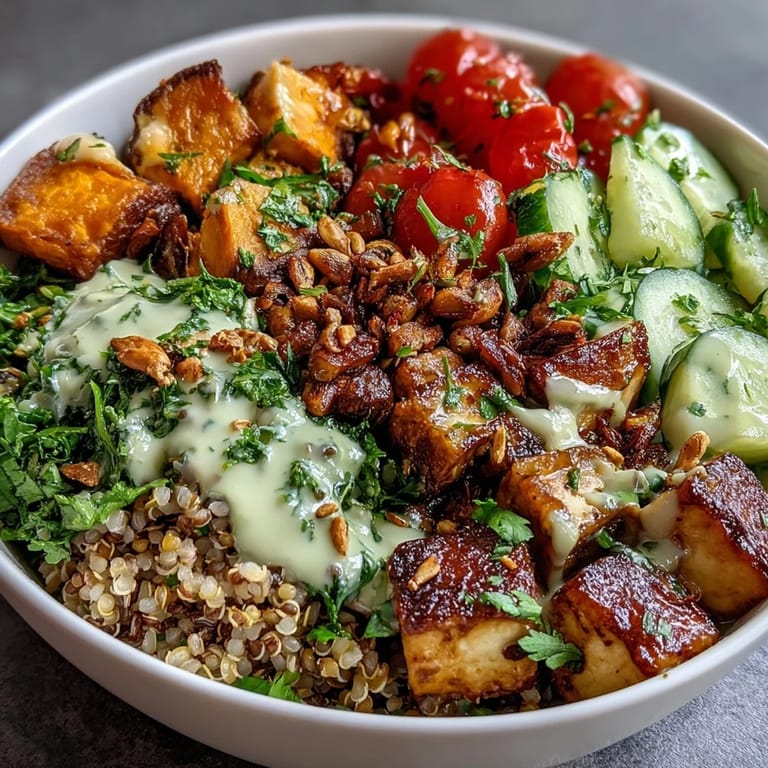
Save There was a moment last month when someone ate one of my prepped bowls and said it tasted like I actually cared about feeding them. That hit differently than any compliment about the food itself because that's exactly what was happening—I was caring, one thoughtful layer at a time.
The Art of Grain Selection
Grains are the foundation, but they're not all the same texture-wise. Brown rice is forgiving and neutral, quinoa has a peppery note and protein boost, farro chews satisfyingly, and couscous is almost buttery. I've learned that matching your grain to your other ingredients matters—quinoa pairs beautifully with Mediterranean flavors, while farro holds up against bolder dressings.
Protein Decisions That Matter
The protein you choose shifts the entire bowl's personality. Chicken is blank canvas energy, tofu absorbs whatever flavors surround it, chickpeas bring earthiness and fiber, and shrimp brings a subtle sweetness. Temperature matters too—warm proteins against cool vegetables create a kind of textural conversation that makes eating slower and more intentional.
Building Flavor Layers
The magic happens when you think beyond just throwing components together and start thinking about contrast. I used to make dull bowls until I realized you need sweet, salty, acidic, and rich all working together.
- Roasted sweet potato gives sweetness, fresh lemon-tahini dressing brings acid and richness, crispy toasted seeds add salt and crunch.
- If your bowl feels flat, it probably needs either something acidic like a squeeze of lime or something crunchy like toasted almonds.
- Taste as you build, adjusting dressing and toppings until your mouth feels happy—this is your bowl, not anyone else's.
 Save
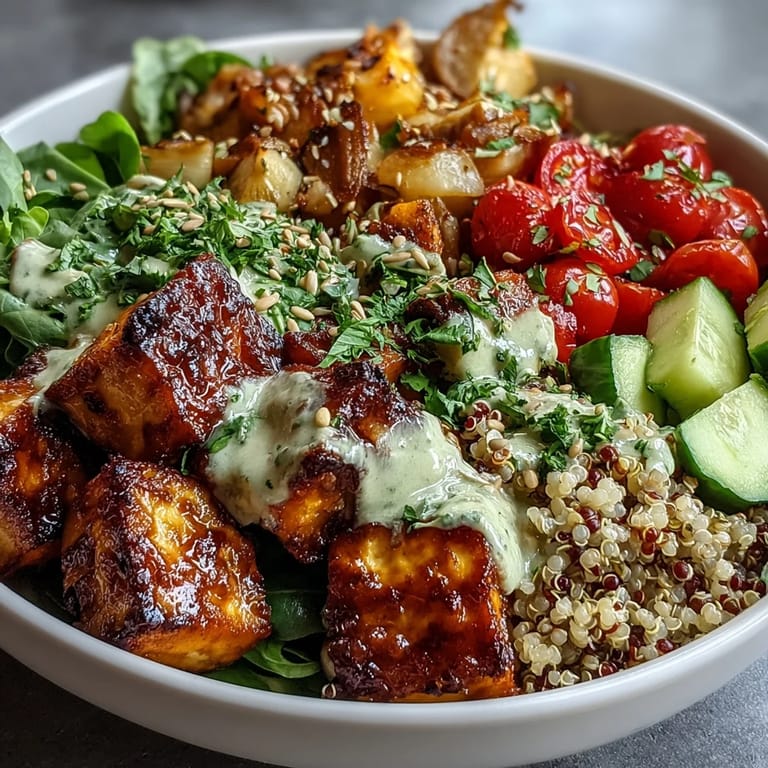
Save These bowls taught me that eating well doesn't require limitation or rigid rules—it requires paying attention. Build something that makes you happy, and suddenly nutrition stops feeling like punishment and starts feeling like self-respect.
Questions & Answers
- → What grains work best in these bowls?
Brown rice, quinoa, farro, and couscous all provide excellent texture and nutrition. Choose gluten-free couscous if needed. Each grain offers different flavors and chewiness levels.
- → How do I make this vegan?
Select plant-based proteins like baked tofu or chickpeas, skip the feta cheese, and choose dressings without honey. The combination still provides plenty of protein and satisfying texture.
- → Can I prepare components in advance?
Absolutely. Cook grains, roast vegetables, and prepare proteins up to 4 days ahead. Store components separately in airtight containers and assemble when ready to eat.
- → What makes a good dressing choice?
Lemon-tahini offers creaminess, balsamic vinaigrette provides tang, soy-ginger adds Asian-inspired notes, and green goddess brings herb freshness. Match the dressing to your chosen ingredients.
- → How can I reduce carbohydrates?
Replace grains entirely with cauliflower rice or use a base of leafy greens. You can also use smaller portions of grains and increase the vegetable ratio.