 Save
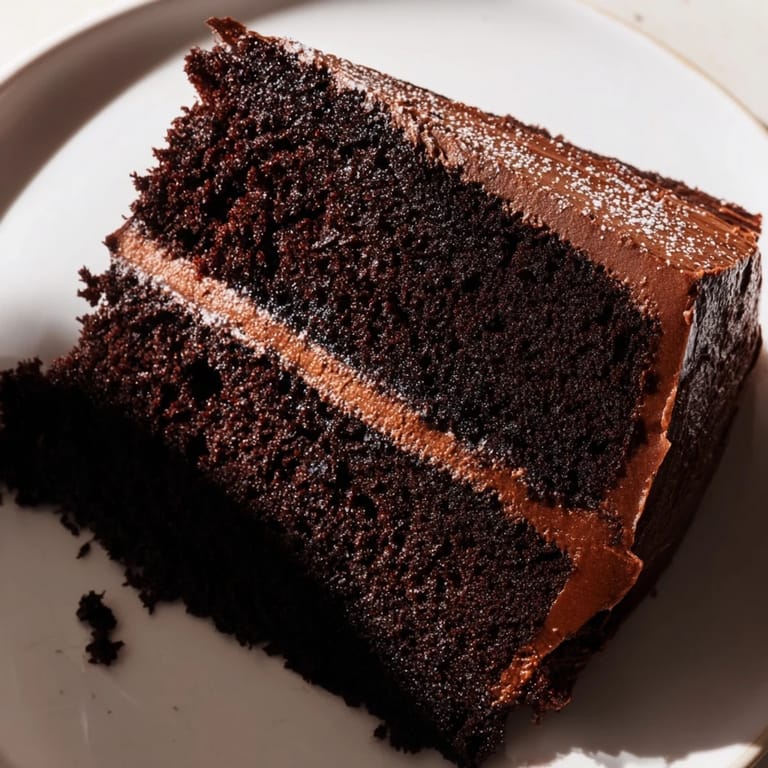
Save There's something about devil's food cake that makes people pause mid-conversation and smile. I discovered this version years ago when a friend brought one to a potluck, and I watched grown adults go quiet just to savor another forkful. What struck me wasn't the recipe itself at first—it was how she described making it: the kitchen filled with cocoa steam, the batter so thin it seemed impossible, then emerging from the oven as this impossibly moist, dark masterpiece. I've made it dozens of times since, and I finally understand the magic.
The first time I made this for my partner's birthday, I was nervous about that impossibly thin batter, convinced I'd made a mistake. When I poured it into the pans, it literally sloshed. But as it baked, something transformed—the aroma rolled through the apartment like a dark chocolate cloud, and when I pulled those cakes out, they were perfectly domed and practically humming with moisture. That's when I became a believer in counterintuitive recipes.
Ingredients
- All-purpose flour: Sift it with the cocoa and leavening agents to avoid lumps and ensure everything distributes evenly—this prevents dense pockets in your crumb.
- Unsweetened cocoa powder: Dutch-processed cocoa has a richer, almost wine-like depth; regular cocoa works too, but the result tastes slightly sharper.
- Granulated sugar: Two cups sounds like a lot, but it balances the intensity of the cocoa and keeps the cake supremely moist.
- Baking powder and baking soda: Both are essential—the soda reacts with cocoa's acidity while the powder provides lift, creating that tender, airy crumb.
- Room temperature eggs and milk: Cold ingredients can seize the batter, so let them sit on the counter for 30 minutes beforehand.
- Vegetable oil: This keeps the cake soft longer than butter alone; it's the secret to that melt-in-your-mouth texture that lasts for days.
- Boiling water: This thin liquid base seems counterintuitive but creates the devil's food signature—a dense, fudgy, impossibly moist crumb.
- Unsalted butter for frosting: Softened butter whips into clouds; cold butter won't combine smoothly with the sugar and cocoa.
- Powdered sugar: Always sift it first; lumps will create grainy frosting no matter how long you beat it.
Tired of Takeout? 🥡
Get 10 meals you can make faster than delivery arrives. Seriously.
One email. No spam. Unsubscribe anytime.
Instructions
- Set your stage:
- Preheat to 350°F and prepare two 9-inch pans with grease and parchment. Cold pans can cause uneven baking, so this step matters more than it seems.
- Blend the dry base:
- Sift flour, cocoa, sugar, baking powder, baking soda, and salt into a large bowl. Sifting aerates everything and prevents cocoa lumps that won't dissolve later.
- Add the wet ingredients:
- With the mixer on medium, add eggs, milk, oil, and vanilla. Mix just until combined; overmixing develops gluten and toughens the cake.
- Incorporate the boiling water:
- Lower the mixer speed and carefully add boiling water. The batter will look impossibly thin—this is correct and creates the legendary moisture.
- Distribute and bake:
- Divide batter evenly between pans and bake 28–32 minutes until a toothpick comes out clean. The centers should feel barely set, not firm.
- Cool with patience:
- Let cakes rest in pans for 10 minutes, then turn onto racks to cool completely. Rushing this step invites crumbling; trust the resting period.
- Beat the frosting:
- Whip softened butter until creamy, gradually add sifted powdered sugar and cocoa, then add milk, vanilla, and salt. Beat until fluffy, adding extra milk a teaspoon at a time if too thick.
- Layer and frost:
- Place one cake on a serving plate, spread frosting generously, top with the second layer, then frost the top and sides. An offset spatula makes this easier, but a regular knife works fine.
 Save
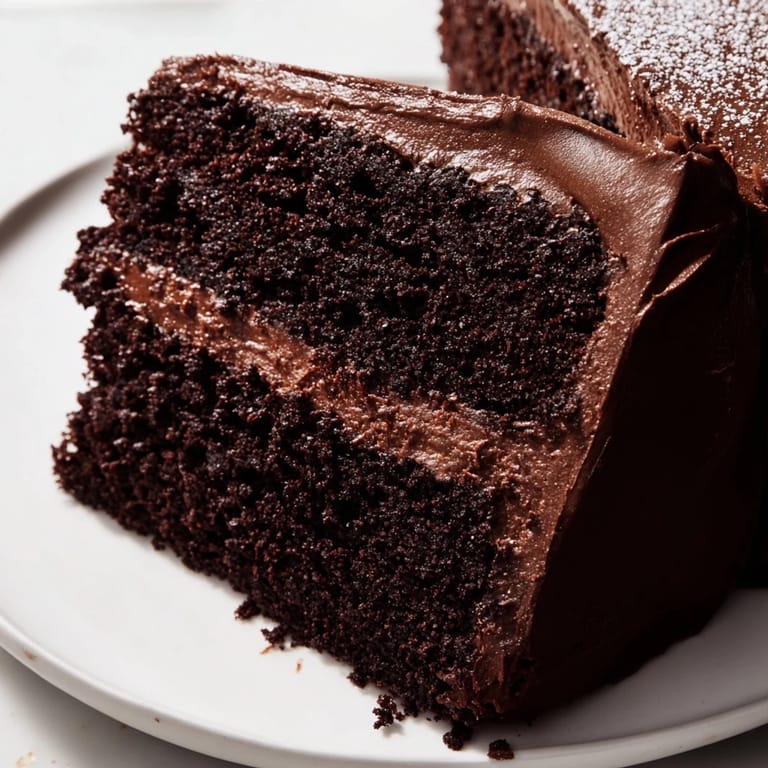
Save Years ago, my mom watched me frost my third devil's food cake and asked why I kept making the same one over and over. I realized then that it wasn't about novelty—it was about reliability, about knowing exactly how something would turn out and how people would react to it. Some recipes are meant to be perfected, not abandoned.
The Cocoa Paradox
The more cocoa you add to a cake, the denser it tends to become, but this recipe defies that logic. The boiling water actually works with the cocoa to create steam, which lightens the crumb rather than weighing it down. I once tried reducing the boiling water to make it more fudgy, and it backfired—the cake became heavy and airless. The original proportions exist for a reason: they're balanced chemistry, not arbitrary.
Storage and Longevity
This cake improves slightly on the second day as the moisture redistributes throughout the crumb. Wrapped at room temperature, it stays tender for up to two days. Refrigerated, it lasts five days but can dry out if exposed to air, so wrap it well. I've even frozen unfrosted layers for up to three months; thaw them overnight before frosting.
Variations and Occasions
This is a template as much as it is a recipe. Swapping boiling coffee for some of the water adds a subtle depth that makes the cocoa taste more complex. Adding a thin layer of chocolate ganache between the cakes feels luxurious without being difficult. You can also dust the frosted cake with cocoa powder for a finishing touch that looks deliberately elegant.
- Substitute brewed coffee for half the boiling water if you want the chocolate flavor to feel more sophisticated and less sweet.
- Add a thin ganache layer between the cakes by melting 4 oz chopped dark chocolate with 1/4 cup heavy cream, cooling slightly, then spreading it on the first layer before topping.
- Garnish the frosted cake with cocoa powder, chocolate curls, or even a simple dusting of powdered sugar for visual interest.
 Save
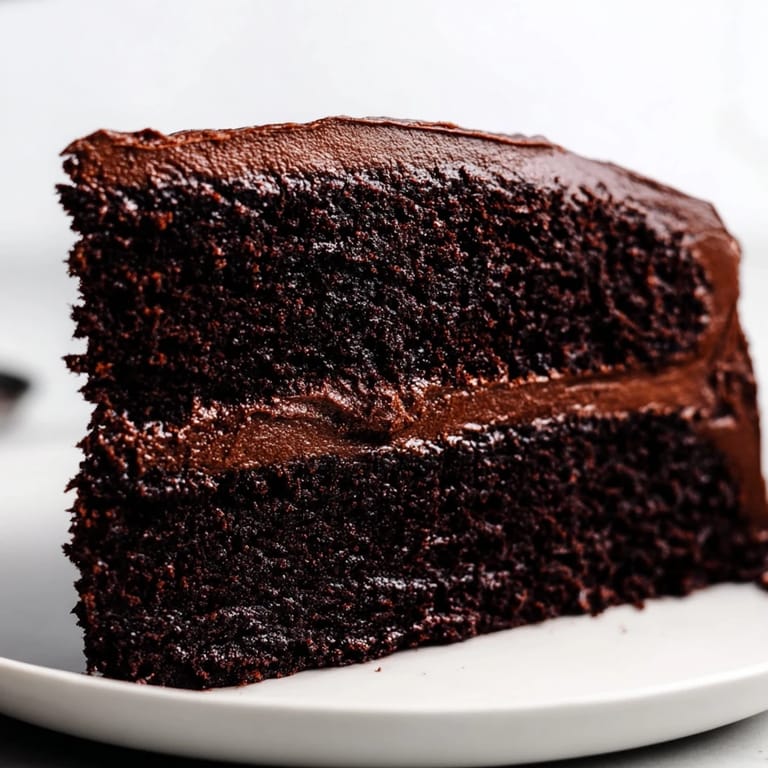
Save Devil's food cake is comfort embodied. It asks for nothing fancy, expects nothing precious, and delivers something undeniably good every single time.
Questions & Answers
- → What does Dutch-processed cocoa powder do for the cake?
It provides a mellow, rich chocolate flavor and contributes to the cake’s deep color and tender crumb.
- → Can I substitute boiling water with another liquid?
Yes, brewed coffee can replace boiling water for a richer, more intense chocolate taste.
- → How do I achieve a fluffy buttercream frosting?
Beat softened butter until creamy, then gradually mix in powdered sugar and cocoa powder before adding milk and vanilla to reach a light, spreadable texture.
- → What’s the best way to store the cake?
Cover it at room temperature for up to two days or refrigerate for up to five days to maintain freshness and texture.
- → Are the cake and frosting suitable for vegetarians?
Yes, both use ingredients that meet vegetarian dietary guidelines, including eggs, dairy, and plant-based oils.