 Save
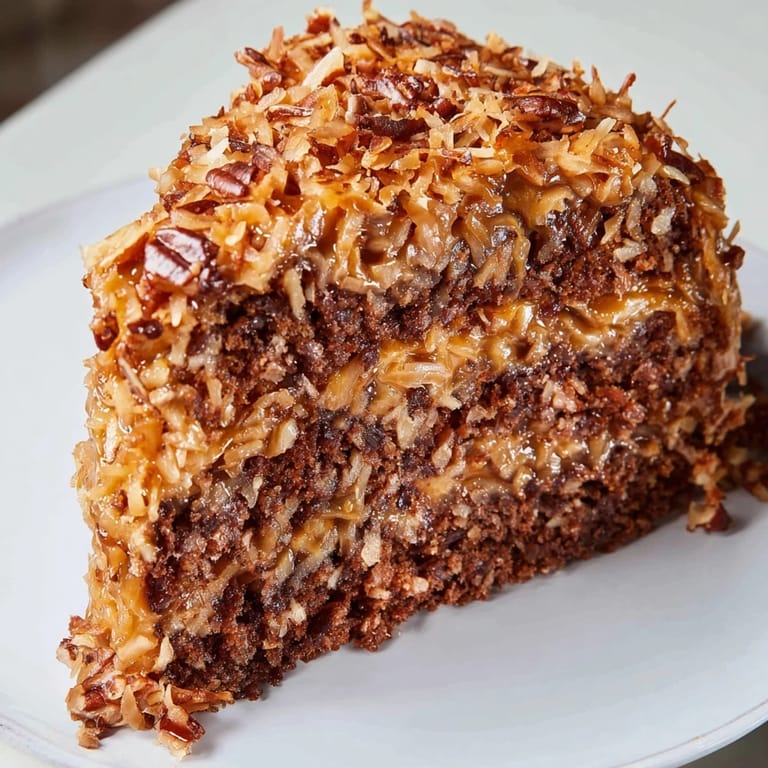
Save My grandmother kept a worn index card tucked behind her kitchen curtains for this cake, the edges stained with cocoa and what I suspect were tears from a particularly emotional dinner party gone right. The first time I made it, I nearly panicked when the batter looked like chocolate soup, but she'd scribbled a note on the back: "Trust the water." Years later, I understand—that thin batter transforms into the most impossibly moist cake, and the warm coconut-pecan frosting melting into those layers is where the real magic lives.
I baked this the night before my husband's promotion party, and I remember standing in the kitchen at midnight, smelling the caramelized sweetness of that frosting bubbling on the stove, feeling genuinely proud of something I'd made with my own hands. When I brought it to the table the next evening, three people asked for the recipe before they'd even finished their first bite.
Ingredients
- All-purpose flour (2 cups): Measure by spooning into the cup and leveling off, not by scooping straight from the bag—this prevents a dense cake that tastes like a chocolate brick.
- Granulated sugar (1¾ cups): The bulk of your sweetness comes here, so don't be tempted to reduce it; the water-thin batter needs this structure.
- Unsweetened cocoa powder (¾ cup): The deeper, more bitter notes come through because the frosting is so rich; this balance is everything.
- Baking powder and baking soda (1½ teaspoons each): These work together to create a tender crumb that doesn't deflate the moment it cools.
- Salt (1 teaspoon): A small amount sharpens the chocolate and keeps the frosting from tasting one-dimensional.
- Large eggs (2), room temperature: Cold eggs won't blend smoothly into the batter; set them out while you preheat the oven.
- Whole milk (1 cup), room temperature: Room temperature ingredients mean a more uniform batter that bakes evenly.
- Vegetable oil (½ cup): This keeps the cake tender for days because oil retains moisture better than butter alone.
- Vanilla extract (2 teaspoons for cake, 1 more for frosting): Real vanilla makes the chocolate sing; don't skip this for the frosting.
- Boiling water (1 cup): This startling ingredient is what makes the chocolate flavor bloom and the cake impossibly moist.
- Evaporated milk (1 cup): Thicker than regular milk and adds a subtle richness to the frosting that makes it feel homemade.
- Unsalted butter (½ cup), cubed: Cube it so it melts evenly into the frosting without creating greasy pockets.
- Sweetened shredded coconut (1⅓ cups): Don't skip the toasting; even untoasted, it softens beautifully in the warm frosting and absorbs all that caramel flavor.
- Chopped pecans (1 cup): Toast them lightly if you have time, but honestly, they're already perfect raw and add a welcome crunch against the silky frosting.
Tired of Takeout? 🥡
Get 10 meals you can make faster than delivery arrives. Seriously.
One email. No spam. Unsubscribe anytime.
Instructions
- Set your kitchen up for success:
- Preheat the oven to 350°F and give your three cake pans a thorough greasing and flouring—it only takes a minute and saves disaster. Have all your ingredients measured and at room temperature before you start mixing; rushing here leads to streaky batters and uneven baking.
- Build the dry foundation:
- Whisk together flour, sugar, cocoa powder, baking powder, baking soda, and salt in a large bowl, breaking up any cocoa lumps with the whisk as you go. This aeration matters more than you'd think; it helps everything blend smoothly in the next step.
- Create a silky batter:
- Add eggs, milk, oil, and vanilla, then beat on medium speed for exactly 2 minutes—the mixer will transform a lumpy mixture into something glossy and pourable. Don't overmix after this point; you're not making bread.
- Embrace the thin batter:
- Stir in the boiling water slowly, watching as the batter becomes almost soup-like; this is exactly right and will seem terrifying if you've never made this cake before. The water blooms the chocolate flavor and ensures that impossibly moist texture.
- Divide and bake:
- Divide the batter evenly among your prepared pans and slide them into the oven, then set a timer for 30 minutes—at 30 minutes, insert a toothpick in the center of the middle cake to check for doneness. If wet crumbs cling to it, give it another 3 to 5 minutes and check again.
- Cool with patience:
- Let the cakes rest in their pans for exactly 10 minutes before turning them out onto wire racks, which stops them from cooking further and prevents cracking. While they cool completely (at least 1 hour), start on the frosting.
- Cook the frosting magic:
- In a medium saucepan over medium heat, whisk together evaporated milk, sugar, egg yolks, and cubed butter, stirring constantly as the mixture slowly thickens. This takes about 12 minutes and smells like caramel and butter—that's when you know it's right.
- Finish the frosting:
- Remove from heat, stir in vanilla, then fold in coconut and pecans, watching as the mixture transforms into something warm and creamy. Spread it while it's still warm if you like a runnier frosting, or let it cool for 30 minutes for something thicker and more spreadable.
- Assemble with intention:
- Place one cake layer on a serving plate, spread a third of the frosting over the top, repeat with the second layer, then crown it all with the final layer and remaining frosting. Frost the sides too if you're feeling generous, or leave them bare for a more rustic look.
 Save
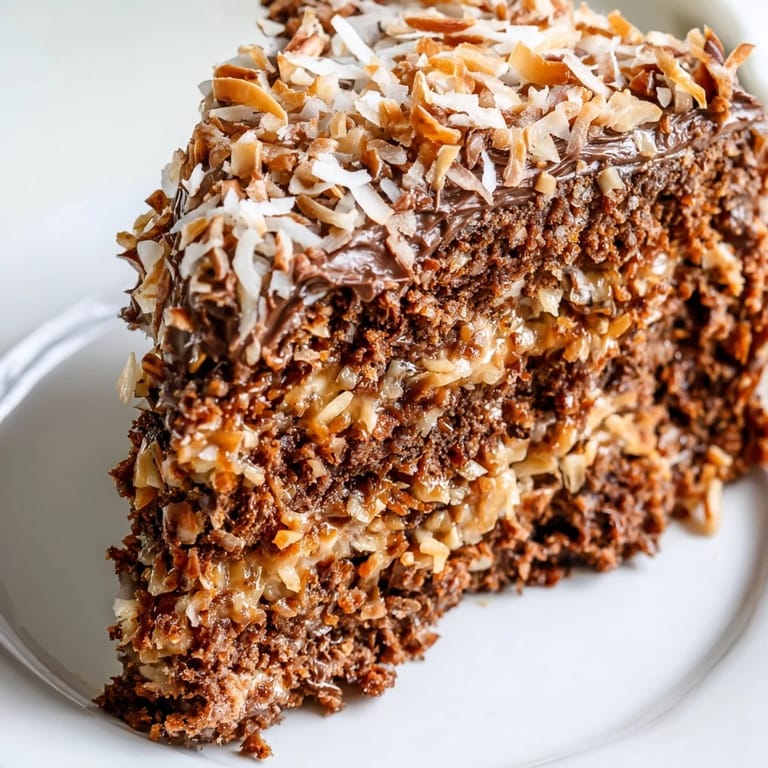
Save I'll never forget watching my daughter take her first bite of this cake at her childhood best friend's birthday party—she closed her eyes like she was hearing a favorite song. That moment taught me that food is really about connection, and this particular cake seems to create those moments wherever it appears.
Why the Coconut-Pecan Frosting Changes Everything
This frosting is not an afterthought or a convenience—it's cooked on the stovetop like a custard, which means it's silky and complex instead of stiff. Most homemade frostings are buttercream, which is delicious but sometimes feels heavy; this one is airy and warm, with a texture that melts into the cake layers. The fact that it's technically a cooked mixture with eggs means it tastes deeply homemade and reminds people of cakes their grandmothers made.
Storage and Make-Ahead Secrets
This cake is one of the rare desserts that actually tastes better the next day because the crumb firms up slightly and all the flavors deepen and marry together. Keep it covered at room temperature for up to 2 days if your kitchen stays relatively cool, or move it to the refrigerator if you're in a hot climate or want to keep it longer. If you're baking ahead for an event, you can make the cake layers a full day early and wrap them individually in plastic wrap, then frost the cake the morning of serving.
Small Tweaks That Transform the Cake
If you love chocolate even more intensely, drizzle melted dark chocolate over the top of the finished cake and let it set—it adds elegance and deepens the flavor without overwhelming the nuttiness. Some bakers use unsweetened shredded coconut in the frosting for a less sweet version, which I understand but don't personally recommend because the sweetness balances the bitter cocoa beautifully. For a showstopper presentation, sprinkle extra toasted coconut and pecan pieces over the top frosting before serving, which catches the light and signals that this cake is special.
- Brush each cooled cake layer with a tablespoon of coffee or rum if you want to add sophisticated depth without anyone knowing what's different.
- Make the frosting a day early and refrigerate it in a covered container, then let it come to room temperature and give it a gentle stir before spreading.
- Toast the pecans in a dry pan for 3 minutes before chopping if you have time—this wakes up their flavor and makes the frosting taste even richer.
 Save
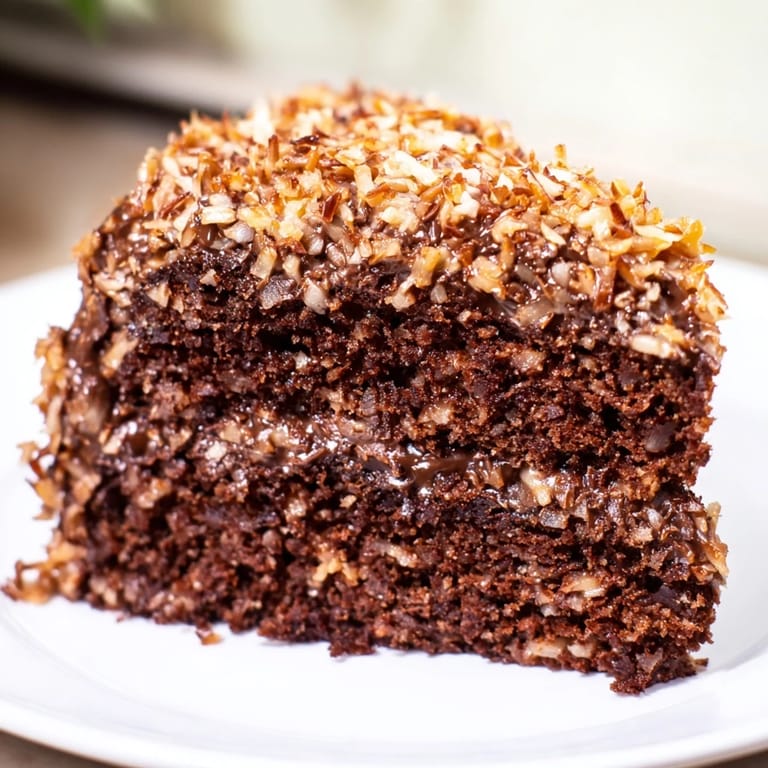
Save This cake isn't just dessert—it's a reason to gather people around a table and watch their faces light up. Make it with care and without pressure, because that's when the magic actually happens.
Questions & Answers
- → How do I achieve a moist texture in this chocolate cake?
Using boiling water in the batter helps intensify the cocoa flavor and keeps the cake moist, while vegetable oil adds tenderness.
- → What gives the frosting its signature texture?
The cooked combination of evaporated milk, egg yolks, butter, shredded coconut, and chopped pecans creates a thick, creamy, and textured frosting that balances sweetness and nuttiness.
- → Can I prepare this cake ahead of time?
Yes, baking the layers in advance and refrigerating the assembled cake allows flavors to meld and makes slicing easier.
- → What tools are essential for this preparation?
You’ll need round cake pans, mixing bowls, an electric mixer, a saucepan for the frosting, and wire racks for cooling.
- → How should I store the cake to maintain freshness?
Store covered at room temperature for up to two days or refrigerate for longer keeping, ensuring the frosting remains firm and flavorful.