 Save
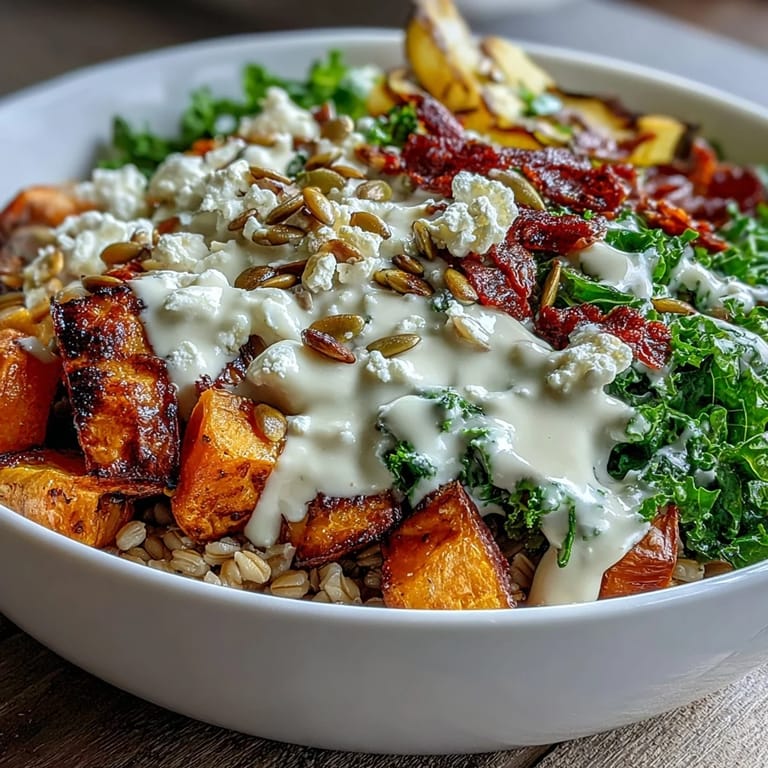
Save Last January, I was standing in my kitchen on a particularly gray afternoon, staring at a handful of root vegetables and wondering what on earth to do with them. My friend had just dropped off a bag of fresh kale, and I'd been meaning to use up that container of tahini that had been lurking in the back of my pantry. What emerged that day wasn't just dinner—it was the kind of bowl that made me feel genuinely cared for, even though I was cooking for myself. The warmth of it, the way the creamy dressing pooled into every crevice, the crunch of seeds—it all just worked together.
I made this for a dinner party once when the weather turned unexpectedly cold, and honestly, I was nervous about serving just a bowl to guests who seemed like they might want something fancier. But when I set them down, with the steam still rising off the grains and the greens glistening with their sauté, something shifted. People slowed down, tasted each component, asked about the dressing. It became a conversation starter, and by the end of the night, two people were asking for the recipe.
Ingredients
- Farro or quinoa: Farro has this chewy, satisfying texture that feels substantial, but quinoa works beautifully too if you need gluten-free—just know that quinoa will finish cooking about 10 minutes faster, so don't wander off.
- Carrots, parsnips, and sweet potato: The parsnips add an earthy sweetness that carrots alone never quite capture, and the sweet potato rounds everything out with a subtle creaminess.
- Kale or Swiss chard: Kale holds up better to the heat and keeps its texture, but Swiss chard wilts more gracefully and feels less aggressive if you prefer something gentler.
- Tahini: This is your dressing's backbone—use good quality stuff because you can taste the difference, and stir it well before measuring since it separates.
- Lemon juice: Fresh is non-negotiable here; bottled versions taste tinny and the tahini needs that brightness.
- Maple syrup: It balances the tahini's earthiness and adds a subtle warmth that honey never quite manages.
- Dijon mustard: Just enough to cut through the richness and give the dressing a gentle backbone.
Tired of Takeout? 🥡
Get 10 meals you can make faster than delivery arrives. Seriously.
One email. No spam. Unsubscribe anytime.
Instructions
- Get your oven ready and prep the vegetables:
- Preheat to 400°F while you peel and cut the carrots, parsnips, and sweet potato into roughly the same-sized pieces—they'll roast more evenly that way. Toss everything with olive oil, thyme, salt, and pepper, then spread on a baking sheet in a single layer so they actually caramelize instead of steam.
- Start the grains:
- Rinse your chosen grain under cold water, then combine with vegetable broth in a medium saucepan over medium-high heat. Once it boils, reduce the heat, cover, and let it simmer undisturbed—this is your chance to prep everything else without feeling rushed.
- Roast the vegetables:
- After about 15 minutes, give the vegetables a gentle stir so they brown evenly on both sides. They're done when they're golden and a fork goes through easily, which usually takes another 10-15 minutes depending on your oven's personality.
- Wilt the greens:
- While the vegetables finish roasting, warm a large skillet with olive oil, add minced garlic, and let it smell amazing for about 30 seconds. Add your chopped greens and a pinch of salt, stirring occasionally until they shrink down and turn a deeper green—it happens faster than you'd expect, usually within 3-4 minutes.
- Whisk the dressing:
- In a small bowl, combine tahini, lemon juice, maple syrup, warm water, Dijon mustard, salt, and pepper. Whisk until smooth and pourable, adding more water a little at a time until you reach the consistency you want—it should coat a spoon but still drizzle easily.
- Bring it all together:
- Divide warm grains into bowls, then layer on the roasted vegetables and sautéed greens. Drizzle generously with dressing—this isn't the time to be shy.
- Top and serve:
- Scatter with toasted pumpkin seeds, crumbled feta if you're using it, and fresh parsley, then serve while everything's still warm.
 Save
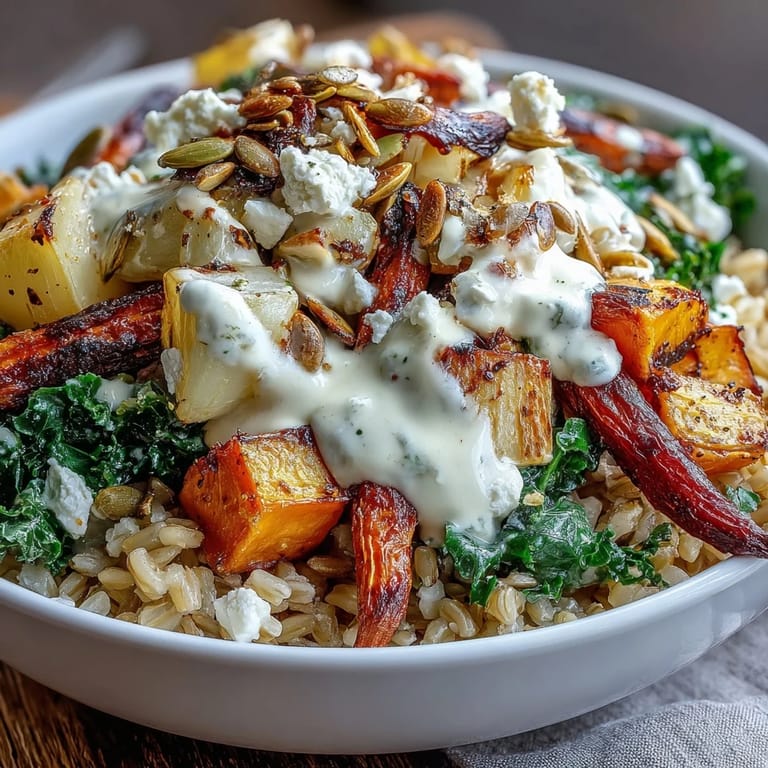
Save There's something deeply human about building a bowl like this, layering different textures and temperatures that somehow become one meal. A few months ago, my partner was going through a particularly stressful time, and I made this for them without saying much about it. They didn't comment on the recipe or the technique—they just ate it slowly, and afterward, something in their shoulders relaxed. That's when I realized this bowl isn't really about nutrition or timing, it's about taking care of people the way you'd want to be cared for.
Why the Dressing Changes Everything
I spent months making grain bowls before I learned that a mediocre dressing can completely undermine good ingredients. The tahini dressing here isn't just a condiment—it's the thread that ties everything together, coating each grain and vegetable with creamy, lemony richness. Once you understand how it works (tahini thinned with liquid, brightened with lemon and acid, mellowed with sweetness), you'll start making it for roasted vegetables, salads, and grilled chicken too.
Grain Choices and Timing
Farro and quinoa cook at different speeds, which matters more than it sounds. Farro takes about 30 minutes and stays chewy and toothsome, while quinoa finishes in 15-20 minutes and creates a lighter, fluffier base. I usually go with farro in winter because it feels more substantial, but quinoa works beautifully if you're making this in warmer months or need something genuinely gluten-free. The key is checking them a minute or two before the timer goes off—overcooked grains turn mushy no matter what you do with the rest of the bowl.
Variations and Customization
The beauty of this bowl is that it adapts to whatever you have on hand or whatever your body is craving. Beets add earthiness, turnips add a subtle peppery note, and Brussels sprouts work wonderfully if you chop them small and roast them longer. For protein, roasted chickpeas add crunch and substance, while grilled chicken makes it more of a traditional main. The dressing works with all of it, which is why having that tahini base in your repertoire matters.
- Swap seasonal vegetables freely—just try to keep them roughly the same size so they roast at the same rate.
- Chickpeas, white beans, or lentils can stand in for grains if that's what you have around.
- Make the dressing vegan by omitting feta and using maple syrup instead of any animal products.
 Save
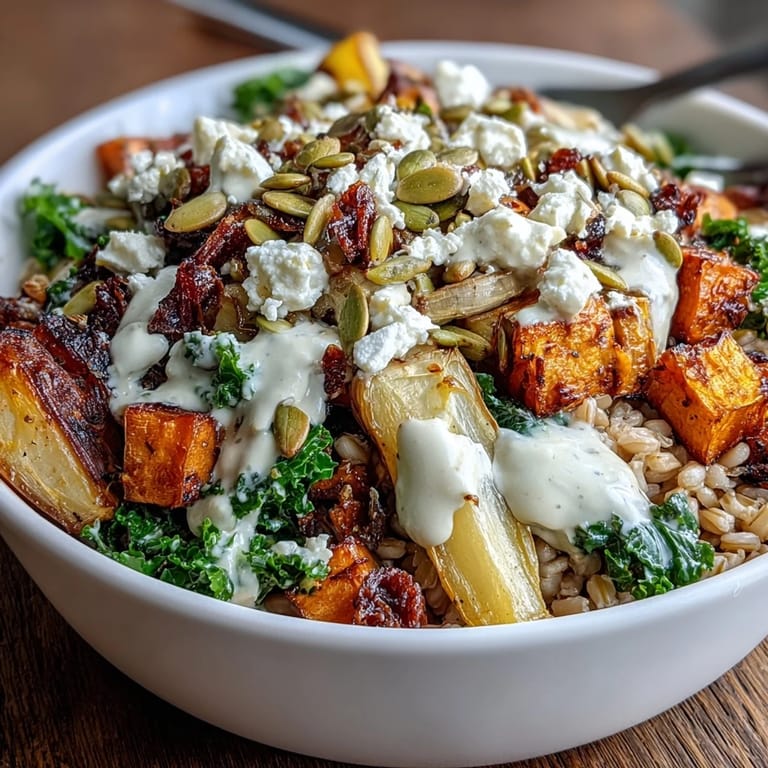
Save This bowl reminds me that food doesn't need to be complicated to be nourishing, and sometimes the most generous thing you can do is take 55 minutes to make something warm for yourself or someone you care about. That's really all this is.
Questions & Answers
- → What grains work best for this bowl?
Farro offers a nutty, chewy texture that holds up well against roasted vegetables. Quinoa cooks faster and provides complete protein while keeping the bowl gluten-free. Brown rice, barley, or wheat berries would also work beautifully with similar cooking times.
- → Can I prepare components ahead?
The roasted vegetables, cooked grains, and dressing can all be made up to 3 days in advance and stored separately in the refrigerator. Reheat the grains and vegetables before assembling, and add fresh dressing for the best texture and flavor.
- → How do I make the tahini dressing smooth?
Whisk the tahini vigorously with warm water and lemon juice. The dressing may seize at first but will emulsify into a creamy consistency as you continue whisking. Add warm water one tablespoon at a time until you reach your desired pourable texture.
- → What other vegetables can I use?
Beets, turnips, rutabaga, or butternut squash all roast beautifully alongside the carrots and parsnips. Brussels sprouts, cauliflower, or red onion would also work well. Use whatever seasonal root vegetables you have available for variety.
- → Is this bowl protein-rich enough for a meal?
The grains provide about 11 grams of protein per serving, but you can boost that by adding roasted chickpeas, a poached egg, grilled chicken, or baked tofu. The tahini also contributes additional protein and healthy fats to keep you satisfied.
- → Can I make this entirely vegan?
Absolutely. Simply omit the feta cheese or replace it with a plant-based feta alternative, or add extra toasted nuts and seeds for richness. The tahini dressing is naturally vegan and provides plenty of creamy satisfaction.