 Save
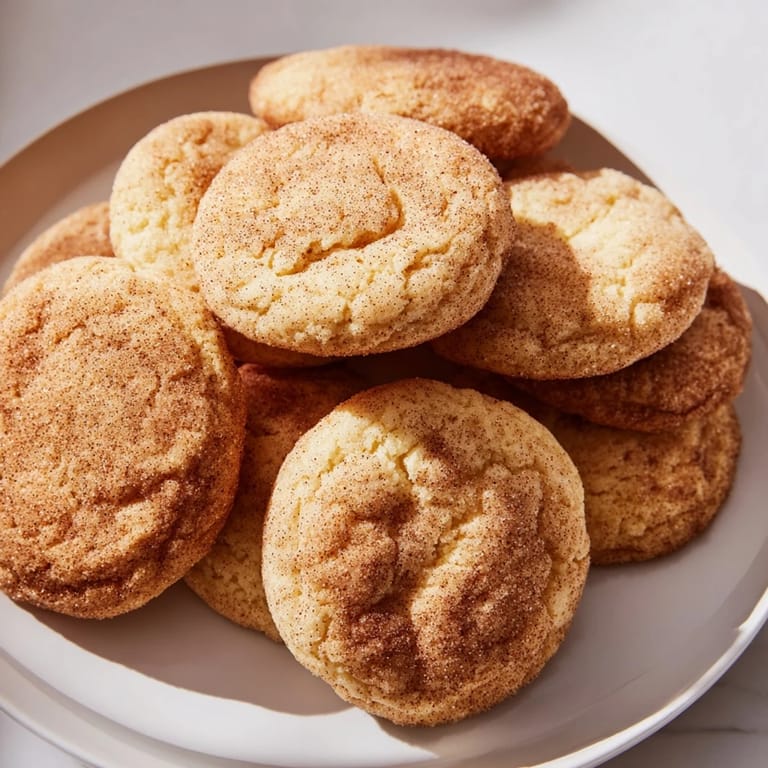
Save There's something almost meditative about the ritual of making snickerdoodles—the way the kitchen fills with that warm cinnamon perfume, how your fingers naturally find their rhythm rolling dough into balls. I discovered these cookies by accident years ago, reaching for cream of tartar in my mother's cabinet and wondering aloud what it actually did. She laughed and said, "That's the secret," then walked me through the process on a lazy Sunday afternoon. Now whenever I make them, I taste that moment of curiosity mixed with butter and sugar.
I made these for my neighbor last winter when she'd been stuck inside with the flu, and she told me the smell alone made her feel better before she even tasted one. There's a kind of magic in baking for someone, especially when a batch takes just long enough to matter but not so long that you're stressed. She kept the empty plate on her porch railing for three days before returning it, which told me everything.
Ingredients
- All-purpose flour (2 3/4 cups): The foundation that keeps these cookies tender rather than cakey—don't sift unless yours is really compacted, just scoop and level.
- Cream of tartar (2 teaspoons): This is your secret weapon, creating that distinctive tangy note and keeping the cookies soft for days.
- Baking soda (1 teaspoon): Works with the cream of tartar to create the perfect rise and that slight chewiness in the center.
- Salt (1/2 teaspoon): A pinch that wakes everything up and balances the sweetness.
- Unsalted butter (1 cup, softened): Softness matters here—leave it out for 20 minutes if you forget, it's worth the wait.
- Granulated sugar (1 1/2 cups): The workhorse that creams with butter to trap tiny air bubbles, making cookies pillowy.
- Large eggs (2): Room temperature if possible, they blend in more smoothly and help everything bind together.
- Pure vanilla extract (1 teaspoon): Don't skip this or use imitation—it's one of only a few flavors, so make it count.
- Cinnamon sugar coating (1/4 cup sugar + 2 teaspoons cinnamon): Mix this together while the dough chills so it's ready to go, and taste it to make sure your cinnamon is fresh.
Tired of Takeout? 🥡
Get 10 meals you can make faster than delivery arrives. Seriously.
One email. No spam. Unsubscribe anytime.
Instructions
- Set up your workspace:
- Preheat your oven to 375°F and line two baking sheets with parchment paper—this is not the time to wing it with bare sheets. Everything sticking together is the enemy of beautiful cookies.
- Build your dry mixture:
- Whisk the flour, cream of tartar, baking soda, and salt in a medium bowl until they're evenly distributed. This step prevents lumps and ensures the leavening agents spread through every cookie.
- Cream butter and sugar:
- Beat them together for 2 to 3 minutes until the mixture looks pale, fluffy, and almost mousse-like. You'll actually see the transformation, and that's when you know the cookies will have the right texture.
- Incorporate eggs and vanilla:
- Add eggs one at a time, beating well after each addition, then mix in the vanilla. This takes about a minute total, but rushing it means you'll have streaks of egg in your batter.
- Bring it together gently:
- Add the dry mixture to the wet mixture in two additions, mixing just until combined. Overmixing develops gluten and makes cookies tough instead of tender.
- Prepare your coating:
- While your dough rests for just a minute or two, stir together the sugar and cinnamon in a small bowl. Having it ready means you won't fumble when your hands are sticky.
- Roll and coat:
- Scoop tablespoon-sized balls of dough and roll each one between your palms into a smooth sphere, then immediately roll it in the cinnamon sugar mixture. The slight warmth of the dough helps the coating stick.
- Space them properly:
- Place each ball about 2 inches apart on the parchment—they spread more than you'd expect, and crowding means they bake unevenly.
- Bake with intention:
- Bake for 9 to 11 minutes until the edges look set and slightly golden but the centers still jiggle a tiny bit when you gently shake the pan. This is the difference between cookies and hockey pucks.
- Cool strategically:
- Let them rest on the baking sheet for 5 minutes while they firm up, then transfer to a wire rack. If you move them too soon, they'll fall apart; too late, and they'll stick to the pan.
 Save
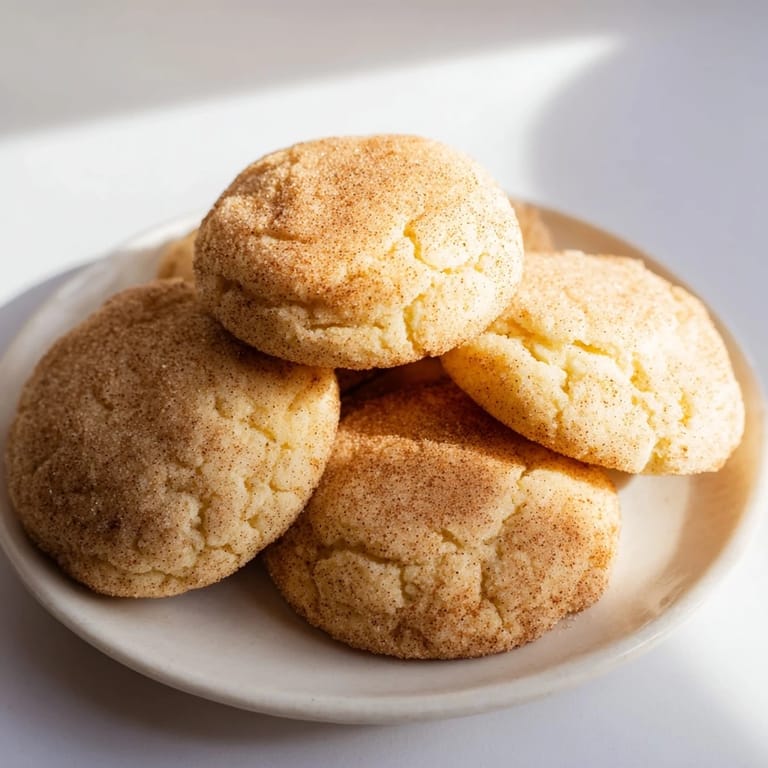
Save My daughter once asked me why they're called snickerdoodles, and honestly, I had no idea—but the name made her giggle every time she said it, and that alone made the recipe worth keeping. She's grown up now, but whenever she comes home, the first thing she asks for is a batch cooling on the rack, and I realize some recipes are less about the food and more about what they represent in your life.
The Story Behind the Cinnamon Sugar Crust
The magic of a snickerdoodle lives on its surface. That cinnamon sugar coating isn't just decoration—it caramelizes slightly in the oven, creating a thin crust that contrasts perfectly with the soft interior. I learned this the hard way when I once tried to dust the cinnamon sugar on after baking, and it just slid right off like the cookie wasn't interested. Now I respect the process: dough ball first, coating second, then straight into the heat. The timing matters, and when you understand why, these cookies become less of a recipe and more of a small ritual you control.
Why Cream of Tartar Changes Everything
Cream of tartar is one of those ingredients that seems mysterious until you taste the difference. It's a byproduct of winemaking—a crystalline acid that pairs with baking soda to create lift and a subtle tang that classic snickerdoodles are built on. The flavor is almost imperceptible, just a whisper underneath the cinnamon and sugar, but without it, you'd have a generic butter cookie instead of something with personality. I once made a batch forgetting it entirely, and my partner said they were good, but they were missing something. He was right. That something is cream of tartar.
Storage and Variations That Work
These cookies stay soft for up to five days in an airtight container, which makes them perfect for baking ahead. If you want them puffier, you can swap half the butter for shortening, though I find pure butter gives the best flavor. For extra softness, underbake them intentionally—pull them out at 9 minutes even if they look slightly raw, let them cool completely, and you'll have cookies that stay chewy for days.
- Store in an airtight container at room temperature, not the fridge, or they'll firm up too much.
- They freeze beautifully raw—scoop and freeze the dough balls, then bake from frozen, adding just 1 to 2 minutes to the baking time.
- If your cookies spread too much or feel cakey, your butter was probably too soft or you overmixed; next time, chill the dough for 15 minutes before scooping.
 Save
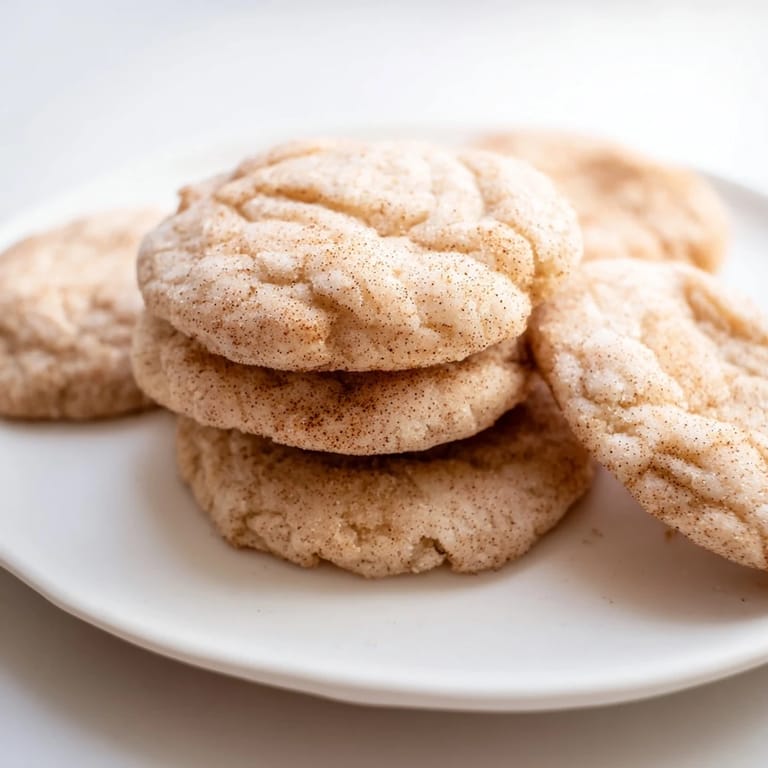
Save Snickerdoodles are proof that sometimes the simplest recipes carry the most meaning. They're humble, forgiving, and they taste like home. Whenever you make them, you're adding to a tradition that stretches back generations, one soft, cinnamon-dusted cookie at a time.
Questions & Answers
- → What gives these cookies their unique tang?
The tangy note comes from cream of tartar, which balances the sweetness and helps create a tender texture.
- → How can I achieve softer cookies?
For extra softness, slightly underbake the cookies and let them cool completely before storing.
- → Can I substitute any ingredients for texture variations?
Replacing half the butter with shortening results in a puffier, lighter cookie texture.
- → What is the best way to store these cookies?
Store in an airtight container at room temperature to maintain freshness for up to five days.
- → What pairs well with these sugar cookies?
These cookies are delicious when enjoyed alongside coffee, tea, or a cold glass of milk.