 Save
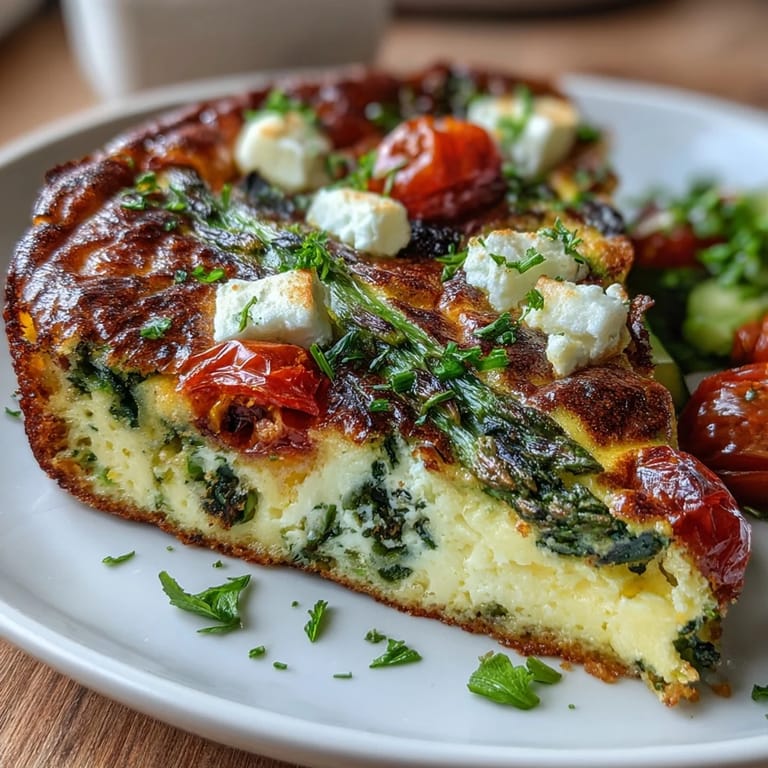
Save My neighbor knocked on my door one Saturday morning with a handful of asparagus from her garden, and I suddenly had that delicious problem of needing to use it up before it wilted. I'd been craving something lighter than the heavy breakfast casseroles I usually made, so I threw together eggs, whatever spring vegetables were lingering in my crisper, and some tangy goat cheese I'd picked up the day before. The whole thing came together in less than an hour, and what emerged from the oven was this impossibly fluffy, golden frittata that tasted like spring itself.
I made this for a small gathering one Easter brunch, and I remember my mom tasting that first bite, pausing for a moment, then asking for the recipe before she'd even finished her plate. There's something about a frittata that feels both casual and special at the same time, like you're feeding people well without making a fuss about it.
Ingredients
- Asparagus (1 cup trimmed and cut into 1-inch pieces): This is your star vegetable here, and it matters that you trim off the woody bottom third or so—you'll know where to snap it naturally if you bend it gently.
- Baby spinach (1 cup roughly chopped): Don't stress about chopping it perfectly; it'll wilt down and you want it to integrate throughout, not sit in big chunks.
- Zucchini (1 small, diced): Keep the pieces small so they cook through by the time the eggs set, and don't worry about peeling it unless you want to.
- Cherry tomatoes (1/2 cup halved): They add sweetness and a little brightness, but they're not essential if you don't have them on hand.
- Green onions (2, sliced): Use both the white and green parts for a gentle onion flavor that won't overpower anything else.
- Large eggs (8): Room temperature eggs incorporate more smoothly, so pull them from the fridge a few minutes early if you remember.
- Whole milk or cream (1/4 cup): This is what makes the frittata light and fluffy rather than dense, but you could use water in a pinch.
- Goat cheese (4 oz crumbled): The creamy tanginess is essential to this dish, so don't skip it or substitute with something mild.
- Parmesan cheese (2 tbsp grated): This adds a sharp, salty note that balances the goat cheese's richness beautifully.
- Fresh chives (2 tbsp chopped): They have a delicate onion flavor that won't compete with the vegetables, and they look pretty scattered on top.
- Fresh parsley (1 tbsp chopped): Use the flat leaf kind if you can find it; it has more flavor than the curly stuff.
- Salt and freshly ground black pepper (1/2 tsp and 1/4 tsp): Season as you taste, especially after the eggs are whisked because you might need a tiny bit more.
- Olive oil (2 tbsp): Use something flavorful here, not the cheapest bottle on the shelf.
Tired of Takeout? 🥡
Get 10 meals you can make faster than delivery arrives. Seriously.
One email. No spam. Unsubscribe anytime.
Instructions
- Get your oven ready:
- Preheat to 375°F (190°C) so it's nice and hot by the time your frittata needs to bake.
- Start the vegetables:
- Heat the olive oil in your oven-safe skillet over medium heat until it shimmers slightly, then add the asparagus and zucchini. Let them cook for about 3 to 4 minutes, stirring occasionally, until they're just starting to soften but still have a little bite to them.
- Add the rest of the vegetables:
- Stir in the spinach, cherry tomatoes, and green onions, and cook for another minute or two until the spinach wilts down and releases its moisture. You want everything tender but not mushy.
- Mix your eggs:
- In a bowl, whisk together the eggs, milk, salt, and pepper until the mixture is pale and uniform, no streaks of white egg white left behind.
- Combine everything:
- Pour the egg mixture slowly and evenly over the vegetables in the skillet, letting it distribute itself naturally without stirring too much. Sprinkle the goat cheese, Parmesan, chives, and parsley over the top.
- Start on the stove:
- Let the frittata cook on the stovetop for 3 to 4 minutes without touching it, until you can see the edges starting to pull away from the pan and set slightly.
- Finish in the oven:
- Transfer the skillet to the oven and bake for 12 to 15 minutes, until the center is just set—it should have a slight jiggle in the very middle but not slosh around. The top will be puffed and golden.
- Cool briefly:
- Let it rest for about 5 minutes before you slice it; this helps it hold together better and also makes it easier to eat because it won't be quite so fragile.
 Save
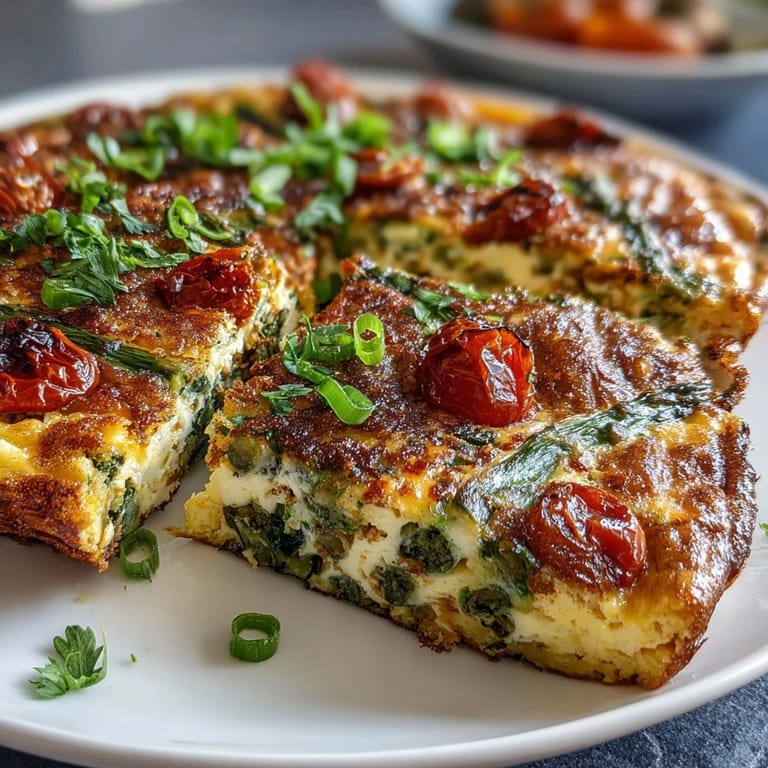
Save There's a quiet satisfaction in cutting into a frittata that's cooked perfectly, watching the eggs hold their shape while still being tender and creamy inside. It's the kind of dish that makes ordinary Tuesday mornings feel a little more intentional.
Seasonal Swaps and Variations
Spring vegetables are the soul of this recipe, but that doesn't mean you're locked into asparagus forever. I've made this in early summer with fresh peas and thin green beans, and in late spring with tender artichoke hearts that I roasted a bit first. The magic is in using vegetables that are in season wherever you are, because they'll be sweeter and more flavorful, and they'll cook faster too.
Make It Your Own
One of the best things about a frittata is that it's genuinely hard to mess up once you understand the basic formula of eggs, vegetables, cheese, and heat. The herb combination can shift based on what's in your garden or your herb drawer, and I've swapped the goat cheese for feta when I was out, or omitted it entirely when I wanted to keep things lighter. Think of this more as a template than a prescription, because the frittata is very forgiving about your substitutions.
Serving and Storage Ideas
Serve the frittata warm with a simple salad dressed in lemon vinaigrette, or let it cool to room temperature and cut it into squares for a picnic or lunch box. It keeps beautifully in the refrigerator for up to three days, which means you can slice off a piece whenever you need something quick and satisfying.
- Serve with crusty bread to soak up any of those wonderful herby, cheesy edges.
- A cold frittata straight from the fridge makes a surprisingly good breakfast the next morning, no reheating required.
- Leftovers are excellent chopped up and tucked into a sandwich with some greens and a spread of cream cheese.
 Save
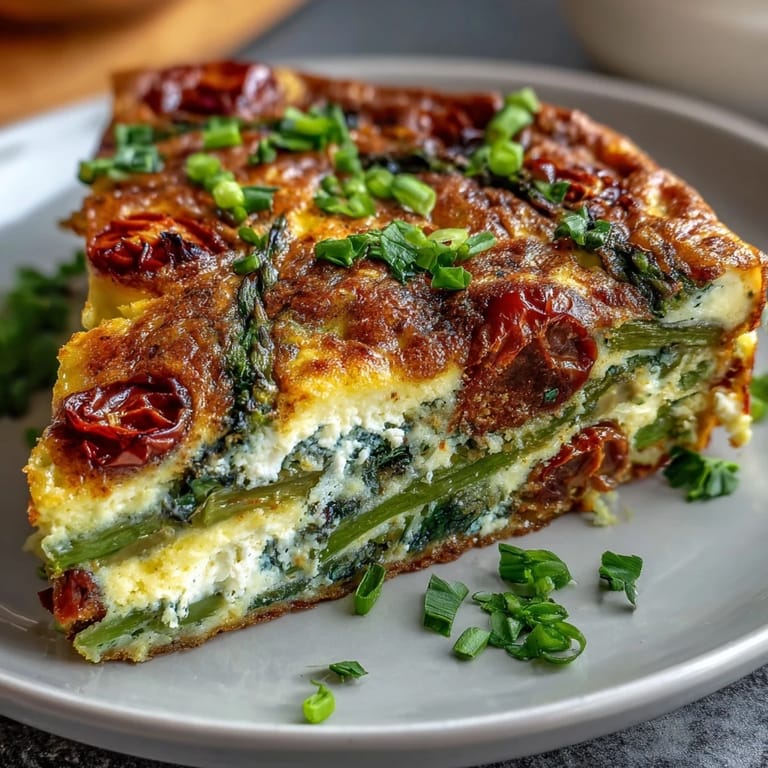
Save This frittata has become my go-to when I want to feel like I've cooked something real without spending much time or effort, and that's exactly when cooking matters most. Make it once, and it'll become part of your regular rotation too.
Questions & Answers
- → Can I substitute the goat cheese with another cheese?
Yes, feta or ricotta work well as milder alternatives, maintaining the creamy texture while complementing spring vegetables.
- → How do I know when the frittata is fully cooked?
It should be puffed and set in the center with no liquid egg visible. A gentle jiggle in the pan means it's ready to remove from the oven.
- → Can additional vegetables be used in this dish?
Absolutely. Peas, artichokes, or asparagus tips can enhance the spring vegetable mix while keeping flavors fresh and vibrant.
- → Is it necessary to pre-cook the vegetables?
Lightly sautéing vegetables like asparagus and zucchini softens them and ensures even cooking within the frittata.
- → What herbs enhance the flavor best?
Fresh chives and parsley add subtle aromatic notes that brighten the dish without overpowering the delicate vegetable flavors.