 Save
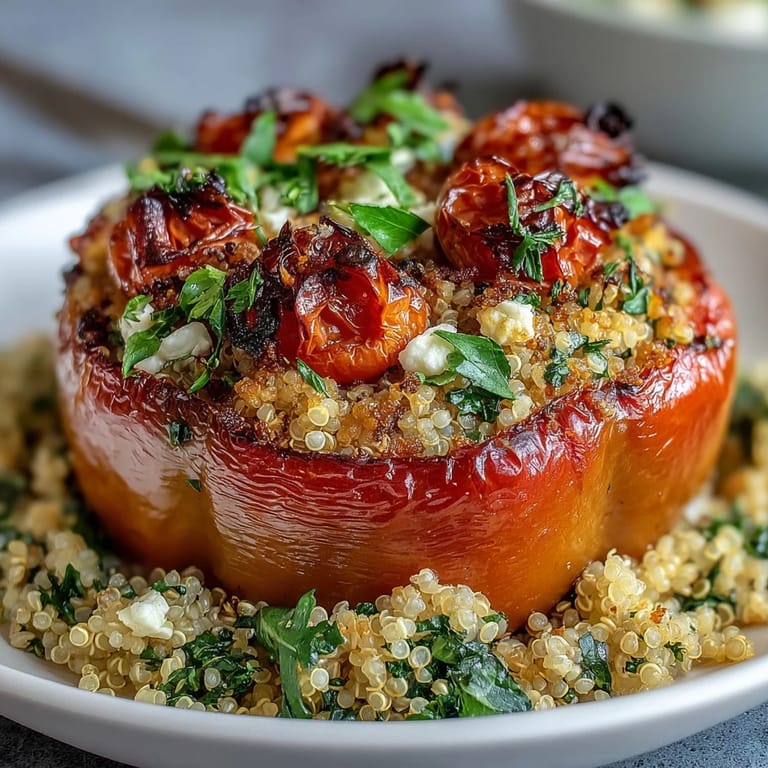
Save There's something magical about the moment you slice into a bell pepper and realize it's become a vessel for something warm and alive. I was standing in my kitchen on an unexpectedly cool spring evening, surrounded by peppers in shades of red, yellow, and orange, when my neighbor mentioned she'd been eating the same sad desk salad for weeks. That conversation sparked something, and I decided right then to stuff these beauties with quinoa and herbs, something colorful enough to make her reconsider what dinner could be. The aroma that filled my apartment as they baked felt like an invitation, not just a meal preparation.
I made this for my sister's book club gathering last spring, and something unexpected happened, the peppers became the conversation starter instead of the book. People kept asking how I got the quinoa so fluffy, whether the mint was really necessary, if they could make it ahead. By the end of the night, three people had photographed their plates, and I realized this humble stuffed pepper had somehow become the thing everyone remembered.
Ingredients
- Large bell peppers (4 total, any color): These are your edible bowls, and choosing different colors makes the finished dish feel like a garden on a plate. I've learned that red peppers are sweeter when roasted, yellows stay bright, and oranges offer a gentle middle ground.
- Quinoa (1 cup, rinsed): Rinsing removes the bitter coating, a small step that transforms the entire experience. It fluffs to roughly three cups when cooked, creating a light, protein-packed base that doesn't feel heavy.
- Vegetable broth (2 cups): This is where the flavor starts, so don't skip to water. A good broth means your quinoa absorbs taste from the very beginning.
- Fresh herbs (parsley, basil, mint): The herbs are what wake this dish up and make it feel alive. I use my hands to tear the basil rather than cutting it, which keeps the leaves from bruising and releasing all their oils at once.
- Cherry tomatoes (1 cup, quartered): These burst slightly during cooking, creating little pockets of brightness. Choose ones that feel firm but have some give to them.
- Zucchini and red onion: The zucchini softens to silken tenderness, while the onion becomes almost sweet from the gentle sauté. Together, they create a vegetable foundation that feels substantial without overwhelming the herbs.
- Feta cheese (1/2 cup, optional): If you use it, crumble it just before folding into the quinoa mixture so it stays distinct and doesn't become paste.
- Olive oil (2 tablespoons): Use one you actually enjoy tasting, since it's a foundational flavor here, not just cooking medium.
- Garlic, salt, oregano, and black pepper: Two minced cloves of garlic are enough to whisper into the filling without shouting. The oregano ties everything to Mediterranean tradition without becoming one-dimensional.
Tired of Takeout? 🥡
Get 10 meals you can make faster than delivery arrives. Seriously.
One email. No spam. Unsubscribe anytime.
Instructions
- Set up your oven and baking vessel:
- Preheat to 375°F and lightly grease a baking dish that will hold your peppers upright. This temperature is deliberate, hot enough to soften the peppers but not so fierce that they collapse.
- Cook the quinoa until it becomes fluffy:
- Bring vegetable broth to a rolling boil, stir in rinsed quinoa, then drop the heat low and cover. After 15 minutes, you'll lift the lid to see the grains have absorbed every drop of broth and are studded with those tiny spiral tails that mean they're properly cooked.
- Build the vegetable base with care:
- Heat olive oil in a large skillet and let the onion and garlic soften first, two minutes until the smell fills the kitchen. Add zucchini and give it four minutes to become tender, then add tomatoes for just two more minutes so they warm through without completely falling apart.
- Marry the components together:
- In a large bowl, combine the fluffy quinoa with your sautéed vegetables, then fold in the fresh herbs, oregano, salt, pepper, and feta if you're using it. This is your moment to taste and adjust, to add a pinch more salt if it needs it, a whisper more pepper if you like it that way.
- Fill each pepper with intention:
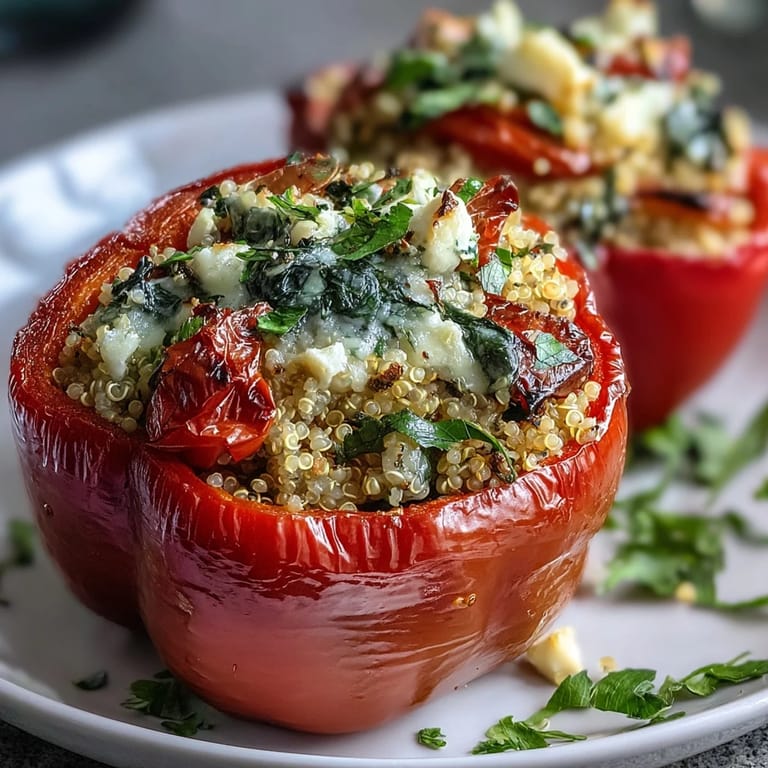
- Pack the quinoa mixture into each bell pepper, filling them generously but not so tightly that the filling can't breathe. Stand them upright in your prepared baking dish like little sentinels.
- Bake covered, then finish with heat:
- Cover the dish with foil and let it bake for 30 minutes, then remove the foil for a final 10 minutes so the peppers brown slightly on top. The covered time steams them into tenderness, while the uncovered time adds a gentle color.
- Rest before serving:
- Let them cool for just five minutes, enough time for the filling to set slightly so it doesn't tumble out the moment you plate it. A few extra herb leaves scattered on top feel like the final brushstroke.
 Save
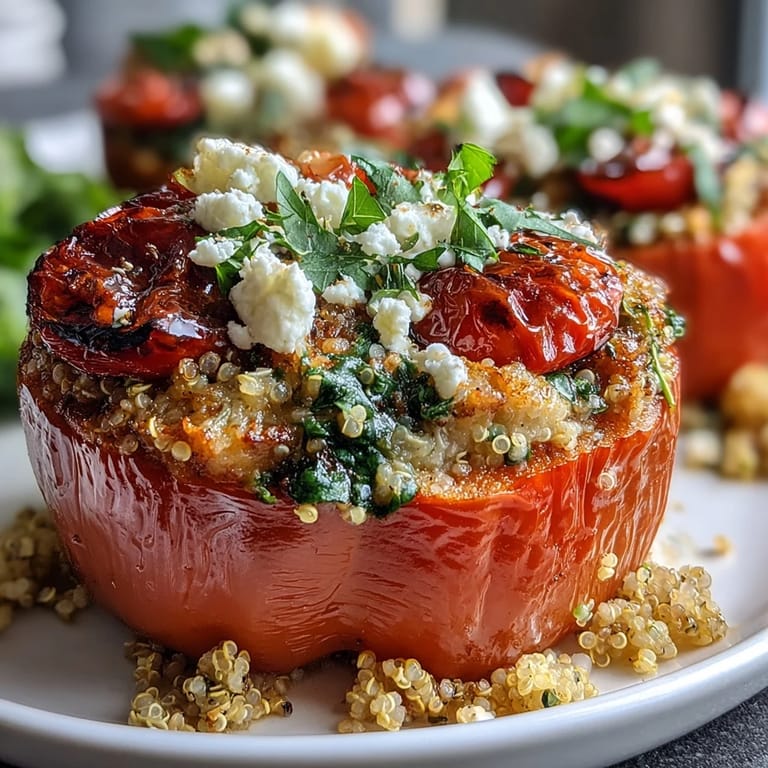
Save Months after that book club night, my sister texted me a photo of these peppers she'd made for herself, and she'd added sun-dried tomatoes and doubled the herbs. It struck me that this recipe isn't precious about being followed exactly, it invites you to make it yours. That flexibility, combined with how beautiful they look when you bring them to the table, turned them into something she actually cooks regularly.
Why This Works as a Spring Dinner
Spring is when you're tired of heavy food but not yet ready for salads you could eat standing over the sink. These peppers land exactly in that sweet spot, warm and filling but built on vegetables and grains rather than cream or cheese as the main event. The fresh herbs remind you that the growing season is here, and the fact that you can serve them at room temperature means you can make them ahead if you're feeding people.
Making It Vegan or Dairy-Free
Simply omit the feta or swap it for a plant-based alternative if you're cooking for someone who needs that version. The dish doesn't feel diminished without it, because the herbs and quinoa are robust enough to carry the whole experience. I've actually preferred it without cheese on nights when I wanted to taste the basil and mint more clearly.
Storage and Serving Ideas
These keep beautifully in the refrigerator for up to three days, and honestly they taste even better the next day when the flavors have had time to get to know each other. Serve them alongside a simple green salad dressed with lemon, or with crusty bread for soaking up any warm juices that escape from the peppers. You can also serve them at room temperature as part of a spring picnic spread, though I think they're best warm enough that the herbs release their aroma.
- Make extra and pack leftovers for lunch, they travel well in a container and taste good cold or gently reheated.
- If you're feeding a crowd, you can prep the filling hours ahead and stuff the peppers just before baking.
- Try adding olives, capers, or sun-dried tomatoes to the filling if you want deeper, more briny notes.
 Save
Save These stuffed peppers have become my go-to when I want to cook something that feels both nourishing and a little bit special. There's comfort in how straightforward it all is, and joy in how beautiful it looks on the plate.
Questions & Answers
- → What type of quinoa is best for stuffing these peppers?
White or tri-color quinoa works well, offering a light texture that complements the fresh herbs and vegetables.
- → Can I prepare the filling ahead of time?
Yes, the quinoa and vegetable mixture can be made a day in advance and refrigerated until ready to stuff and bake.
- → How do I know when the peppers are fully cooked?
The peppers should be tender and slightly browned on top after baking; a fork should easily pierce the flesh.
- → Are there good alternatives to feta cheese in this dish?
Plant-based cheeses or simply omitting the feta maintains the dish’s flavor especially for vegan preparations.
- → What side dishes pair well with these stuffed peppers?
A fresh green salad and crusty bread complement the meal nicely, balancing the rich quinoa and herbs.